Featured Post

Tracking air pollution disparities -- daily -- from space

Studies have shown that pollution, whether from factories or traffic-snarled roads, disproportionately affects communities where economicall...

Wednesday, December 30, 2020

Physicists are still hunting primordial black holes to solve the dark matter problem


For a while now, physicists have been hunting for primordial black holes, exotic objects that could have formed in the early Universe and spawned a whole range of cosmic shenanigans.


Using a giant 8.2-metre-wide (that's 27 feet) telescope, physicists from the University of California, Los Angeles, and the Kavli Institute for the Physics and Mathematics of the Universe in Japan are searching for signs of these objects; discovering them could even suggest our Universe was breeding baby universes when it was a wee youngster itself.


What they hope to see won't exactly be as scandalous as peeping into alternative realities. But if their new models are correct, and they're patient enough, they might find a primordial black hole (PBH) floating between us and a nearby galaxy.


Discovering such an object has the potential to fill in several gaps in our knowledge on a whole range of phenomena, from the nature of dark matter to the distribution of heavy elements throughout space.


More tantalisingly, it could also be a clue as to whether our own Universe is just one of many in a branching family tree of multiverses once spawned as its babies during the cosmic inflation - although plenty of debate would still remain on the latter point.


Primordial black holes have a lot in common with run-of-the-mill black holes formed by collapsing stars. They are both intense concentrations of matter that pinch surrounding space-time into a singularity, for example.


Singularities are themselves curious objects, comprising of points where the space-warping physics of general relativity meet the more granular metrics of quantum mechanics. Unfortunately these two master theories don't agree on certain crucial details of reality, so nobody is precisely sure what a singularity is.


Even the surrounding warping of space and time makes a mess of our intuitions, leaving room to speculate that each black hole is an umbilicus to an entirely separate universe.


It's not as far-fetched as it sounds. There are plenty of good reasons to think once a tumbling observer crosses the event horizon – a line of no return – space and time become indistinguishable from an expanding universe like ours.


That would mean that every time a star collapses to form a singularity, our Universe becomes a parent. Mazel tov!


Where PBHs differ is that they would have been spawned back when our Universe was maybe around a second old, a time when radiation dominated (and not much else).


Given enough of a shove in any one area, that concentrated sea of light could tip over the edge into a singularity. And because conditions were already extreme, the amount of mass required would be far below that needed for even the smallest stellar black holes.


Primordial black holes are interesting ideas in desperate want of solid evidence. Unfortunately smaller holes would have long since evaporated in a puff of Hawking Radiation. And anything large enough we'd surely have noticed by now.


But there are possibilities researchers have yet to rule out.


In this new model, the team returned to a theory where quantum effects in empty space could create something of a vacuum bubble, providing a seed for collapse.


Their maths shows these conditions during a period of rapid inflation could reasonably create primordial black holes of a range of masses. Interestingly, some would match what we'd expect of dark matter.


It's an old idea that's been kicked around for a while, to the extent that it's looking increasingly unlikely as a candidate. If a population of these itty-bitty black holes does behave like dark matter, it'll probably only account for a proportion of it.


Just to add to the scepticism, the method the team wants to use to search for these objects has also been attempted before.


Last year, researchers used the Subaru Telescope's Hyper Suprime-Cam to collect nearly 200 snapshots of our neighbouring galaxy Andromeda over the course of seven hours, just to see if a PBH with the mass of our own Moon might float by.


Aside from a single 'maybe', the experiment didn't find anything overly exciting.


But with this new model, the researchers argue if we wait a little longer – like around 88 hours – we just might get lucky this time. Or at least rule out their prediction.


Identifying a primordial black hole of this size would provide cosmologists with an object that could help to explain a range of perplexing problems. Not only might it contribute to our understanding of dark matter, their collisions with neutron stars might explain fast radio bursts.


We might have already seen a smash-up between these light-weight black holes in a signature of a gravitational wave event that had all the hallmarks of a neutron-star merger, without the flash.


As to whether these ancient black holes truly house the babies of our own Universe, we'd need some pretty revolutionary physics to confirm. But the kinds of black holes produced in this scenario would be just what we're looking for.


Fingers crossed Hyper Suprime-Cam just might contribute a little something to the family album.


This research was published in Physical Review Letters.


#Space | https://sciencespies.com/space/physicists-are-still-hunting-primordial-black-holes-to-solve-the-dark-matter-problem/

Ancient Pompeiians Stopped at This 'Snack Bar' to Feast on Snails, Fish and Wine

When the people of ancient Pompeii had a hankering for a quick and easy meal, they might opt to visit one of the city’s numerous thermopolia—the Roman equivalent of snack bars, where customers could choose from a selection of ready-made dishes, kept warm in jars that were set into a counter. Now, as Agence France-Presse (AFP) reports, discoveries at one such thermopolium are shedding new insight into the menus of Pompeii’s fast food joints.


The thermopolium in question is located in an area known as Regio V, and like the myriad other archaeological finds to emerge from Pompeii, it has been remarkably well preserved after a catastrophic volcanic eruption in 79 A.D. blanketed the city with ash and debris. The snack bar was partially excavated in 2019, leading to the discovery of a counter decorated with a fresco of a Nereid, or sea nymph, riding a seahorse, along with what appears to be a depiction of the restaurant itself.


This site represents one of 80 thermopolia discovered at Pompeii, but “the possibilities for study of [the Regio V] thermopolium are exceptional, because for the first time an area of this type has been excavated in its entirety,” says Massimo Osanna, interim director general of the Archaeological Park of Pompeii.


During the latest phase of the excavation, archaeologists unearthed “exquisite scenes of still life” showing animals—like mallard ducks and a rooster—that were probably butchered and sold at the snack bar, according to a statement by the Archaeological Park of Pompeii. A fragment of duck bone was indeed found at the site. Experts are still working to analyze other remains discovered inside dolia, or terracotta jars that were embedded into the counter and filled with food and drink. But Chiara Corbino, a archaeozoologist who participated in the dig, tells Elisabetta Povoledo of the New York Times that two jars appear to have stored a fish and pork dish, along with “a concoction involving snails, fish and sheep,” perhaps some sort of soup or stew.


Experts are certain that one dolium discovered at the site held an alcoholic beverage; it contained both a bottle for drawing liquid and the remnants of ground beans, which were used to bleach wine. Yet another vessel may have been used to store grains, as indicated by the skeletal remains of a mouse found inside.


Archaeologists also discovered the bones of a small dog in a corner of the thermopolium. A larger pooch is depicted in one of the counter’s frescoes, which happens to be inscribed with a rather rude slur.


“This was probably left by a prankster who sought to poke fun at the owner, or by someone who worked in the thermopolium,” according to the Archaeological Park of Pompeii.


The ancient city is well known for its bawdy graffiti, and thermopolia were likely not among its more refined establishments. As Smithsonian’s Jason Daley reported in 2019, ancient snack bars had a bad reputation as the haunts of criminals and heavy drinkers. The emperor Claudius once ordered them to be shut down.


Like other sites in Pompeii, the thermopolium preserves the final moments of lives cut short by one of history’s most devastating natural disasters. During the excavation, experts found human bones belonging to an individual at least 50 years old, who appears to have been in bed when calamity struck; nail and wood residues were discovered beneath the body.


“The counter seems to have been closed in a hurry and abandoned by its owners but it is possible that someone, perhaps the oldest man, stayed behind and perished during the first phase of the eruption,” Osanna told the Ansa news agency, according to the AFP. Bones belonging to a second individual were found inside a large dolium, possibly placed there by illegal excavators in the 17th century.


Work at the thermopolium is expected to conclude in March, Osanna tells the New York Times. Pompeii is currently closed to the public because of the coronavirus pandemic, but when it reopens, visitors will be able to explore this fascinating spot, where residents of a doomed city once grabbed their meals.


#History | https://sciencespies.com/history/ancient-pompeiians-stopped-at-this-snack-bar-to-feast-on-snails-fish-and-wine/

Fireballs and iguanas? 7 weird things that have fallen from the sky

Space rocks crash to Earth carrying compounds that were formed billions of years ago. Spaceships perform fancy flips in the air but explode when they touch back down too quickly. And sometimes, iguanas fall from trees and land belly-up, frozen on the ground. 


Here's a list of seven intriguing objects - and a few reptiles - that made headlines for falling from the sky.


Exploding, green fireball over the Tasman Sea 


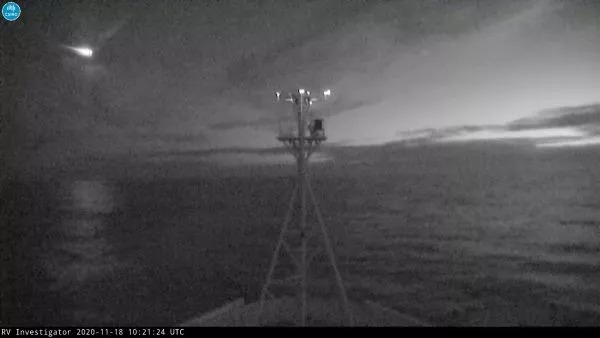
things that fell from the sky 1(CSIRO)


Researchers captured an incredible video when a bright, green meteor zipped over the southern coast of Tasmania, Australia - though a bit unfortunately, the video is in black-and-white.


A research vessel called Investigator, which is operated by Australia's national science agency, CSIRO, filmed the fireball as it burst through Earth's atmosphere, crossed the sky and then disintegrated above the Tasman Sea.


People who witnessed the meteor first-hand said that it appeared green to the naked eye. 


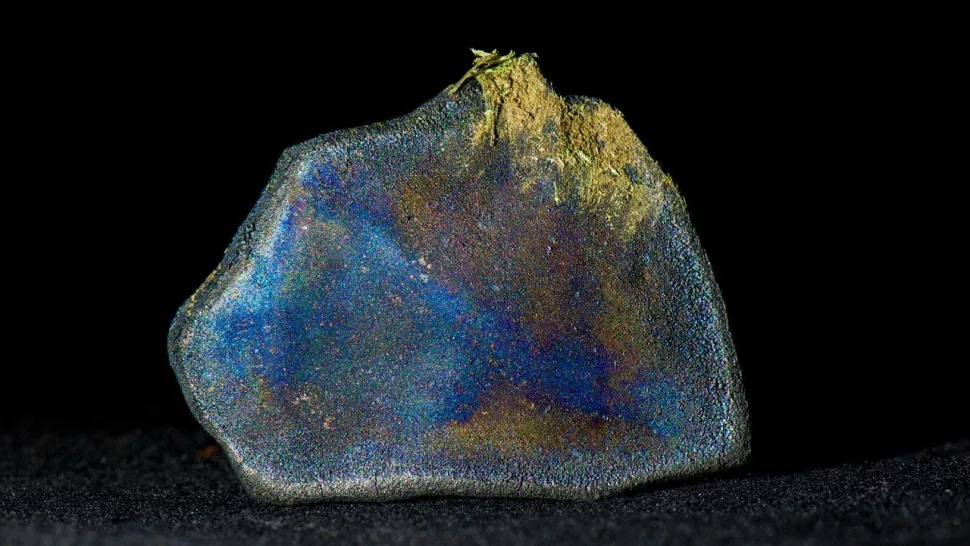
Rainbow meteorite found in Costa Rica 


things that fell from the sky 2(Laurence Garvie/Center for Meteorite Studies/Arizona State University)


rainbow-color space rock broke up over Costa Rica in 2019 and scattered debris between the villages of La Palmera and Aguas Zarcas. Now, ongoing studies hint that the fireball may contain the chemical building blocks of life.


The soft meteor originally broke off of a larger asteroid, which formed out of dust from an ancient nebula. That very nebula would later birth our Solar System. The rainbow meteor contains complex carbon compounds, which may include amino acids, which can come together to form proteins and molecules like DNA. 


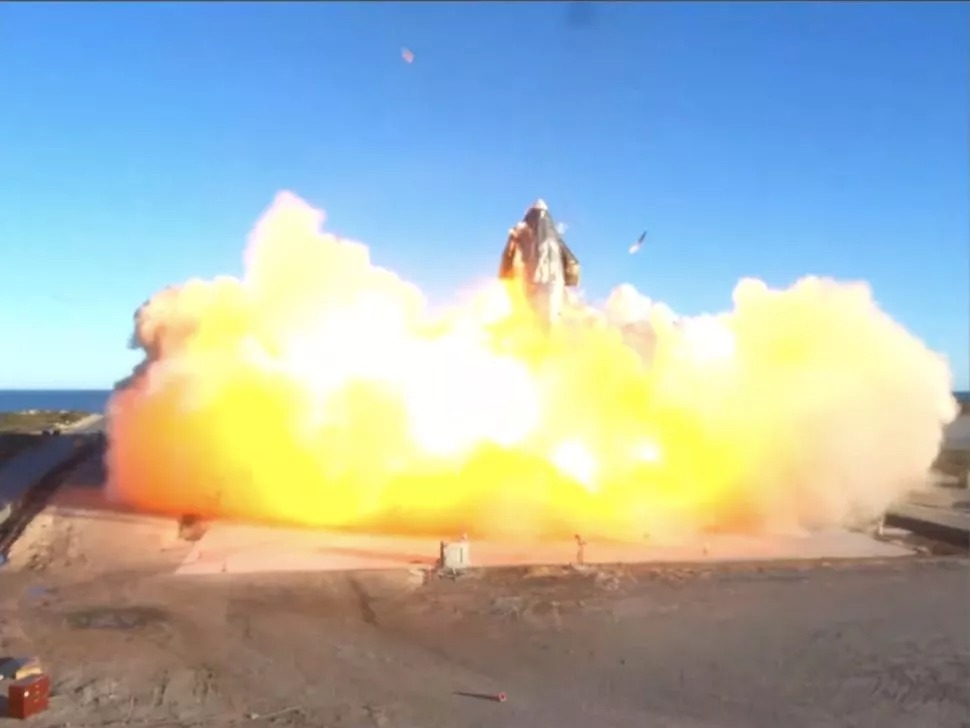
The sudden explosion of a SpaceX prototype 


things that fell from the sky 3(SpaceX)


SpaceX's Starship program launched a prototype called SN8 during a high-altitude test flight, and all went according to plan - other than the landing. The prototype took off from SpaceX's facility Boca Chica, Texas and zoomed about 7.8 miles (12.5 kilometers) into the sky, performing complex aerial maneuvers on the way.


The vehicle then descended onto a designated landing mark on the ground, but it came in too fast and burst into flames. The explosion occurred just 6 minutes and 42 seconds after lift off. 


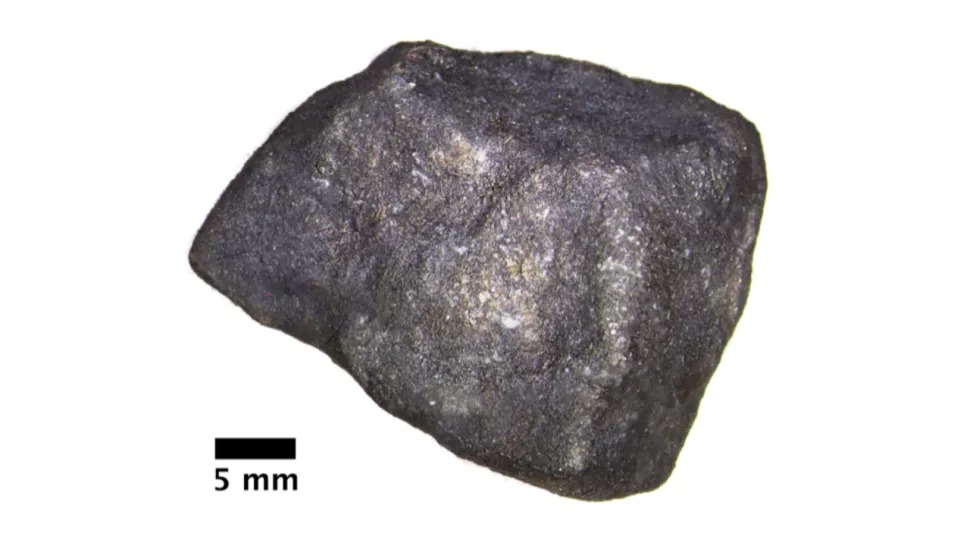
A meteorite in Michigan 


things that fell from the sky 4(Heck et al., Field Museum)


A meteorite crumbled up in the sky over Hamburg, Michigan, and the pieces fell down onto a frozen lake below. That was in January 2018; this year, after thoroughly analysing the space rock, scientists announced that the meteorite contained thousands of organic compounds that formed billions of years ago.


The compounds date back to the early days of our Solar System, meaning meteorites that crashed onto young Earth may have carried similar molecules. Back then, organic compounds from meteors could have been incorporated into primitive microbes, the team said, so studying the Michigan meteor can give us a glimpse into early life on the planet. 


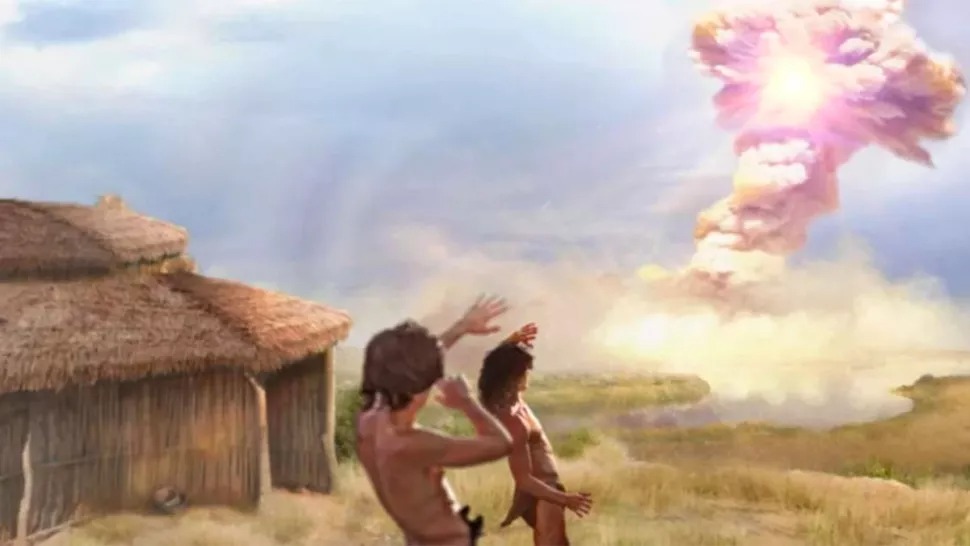
Comet debris may have leveled an ancient Syrian village 


things that fell from the sky 5(Jennifer Rice/CometResearchGroup.org)


The prehistoric village of Abu Hureyra in northern Syria housed the first known farmers on Earth, but then some mysterious, fiery incident destroyed the town, leaving mostly remnants of thatched huts coated in carbon.


Among the wreckage, excavators also found glass spheres formed from melting soil, melted iron- and sulfur-rich samples and nanodiamonds.


Scientists recently examined these glassy materials more closely and found that they could only have formed at temperatures over 3,630 F (2,000 C). The team concluded that fragments from a passing comet likely exploded over the village, releasing an intense heatwave that scorched the village and the soil beneath it. 


Dinosaur-killing asteroid struck at the worst possible angle 


things that fell from the sky 6(Chase Stone)


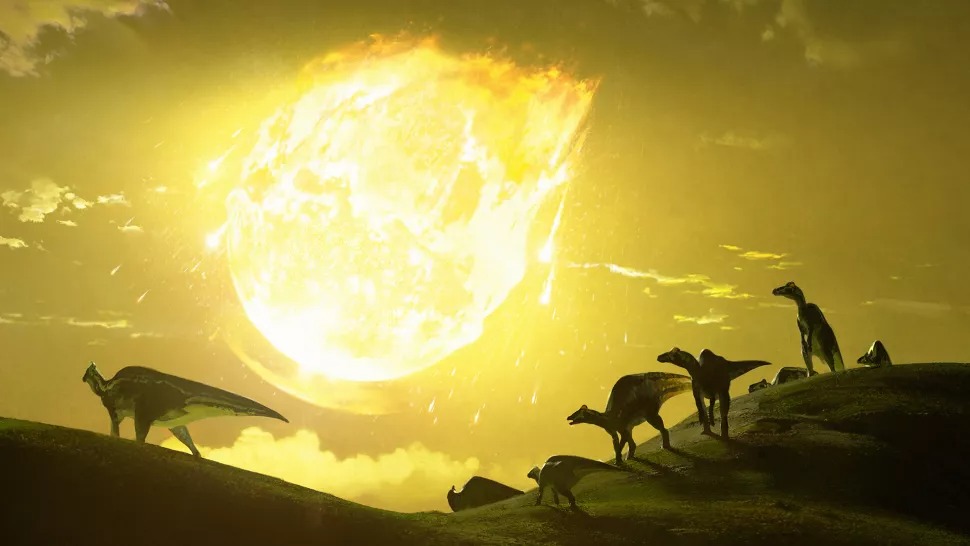
The monstrous space rock that wiped out the dinosaurs slammed into Earth at such a steep angle that the dinos never really stood a chance. Scientists modeled the path of the asteroid and found that it struck at an angle of about 60 degrees above the horizon.


Compared with shallower impact angles, this trajectory caused the asteroid to spew about three times as much sulfur and carbon dioxide into the atmosphere, according to the model. The gas released by the impact triggered global climate change and killed 75 percent of all life on Earth, including all non-avian dinosaurs.  


Iguanas raining down on Floridians 


things that fell from the sky 7(Chase Stone)


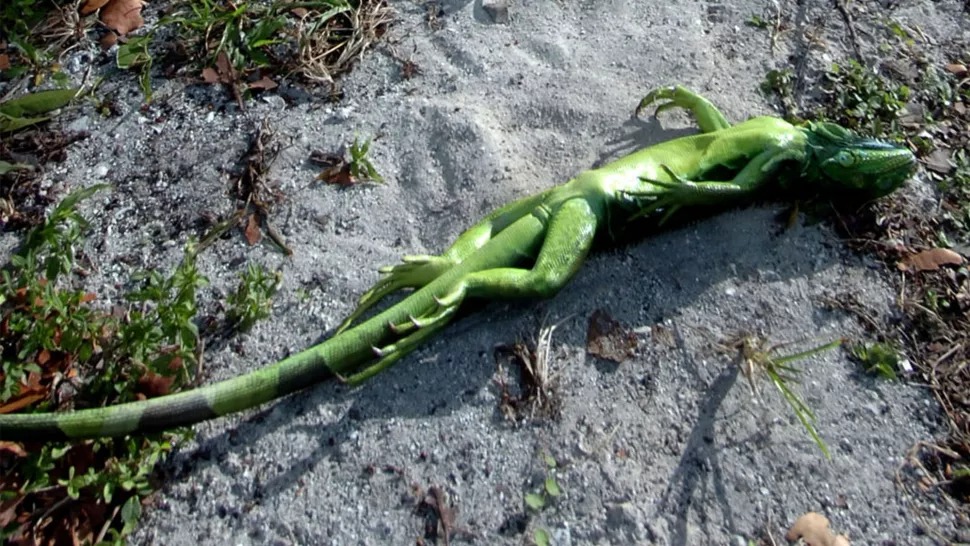
"Cool temperatures with a chance of falling reptiles" - this is essentially the warning the National Weather Service sends out when the temperature falls below 40 degrees Fahrenheit (4.4 degrees Celsius) in southern Florida.


That's because, when the weather gets cool, the iguanas that usually hang out in the treetops become too old to hold onto branches. As their metabolisms slow down, the lizards go stiff, fall to the ground and appear dead; but once the weather warms up, they snap back into action.


This article was originally published by Live Science. Read the original article here.


#Space | https://sciencespies.com/space/fireballs-and-iguanas-7-weird-things-that-have-fallen-from-the-sky/

Massive, unrivalled deep-sea project just discovered a bunch of new Atlantic species

It's taken nearly five years, 45 research expeditions, and more than 80 scientists and students, but the largest oceanic research enterprise, the ATLAS project, is officially complete.


Exploring 12 locations in the deep northern Atlantic, the project has set a gold standard for future marine research.


Driving underwater robots to areas never before explored, researchers have uncovered a dozen newly identified species, including fish, cold-water coral and other invertebrate sponge species. Not to mention the discovery of 35 known species in previously unknown areas.


Already, the results have produced 113 peer-reviewed papers, with 98 more soon to follow. 


Among the new findings is a type of coral growth, known as Epizoanthus martinsae, which thrives on black corals over 400 metres deep (1,300 feet).


Other discoveries include a type of sedentary animal resembling moss, called Microporella funbio, which was found in an undersea mud volcano off the coast of Spain.


Another moss-like animal, named Antropora gemarita, was also found filtering and feeding particles of food drifting in the deep sea. 


The project and its findings are unrivalled and speak to how much the deep ocean still has to offer. Yet without healthy, deep-sea ecosystems, these newly discovered species will no doubt struggle to survive. 


"As the birthplace of deep-sea biology and the cradle of oceanography, the North Atlantic is the place we should know best," says Murray Roberts, the ATLAS coordinator, "but only in the last 20 years have we uncovered how varied and vulnerable its deep-sea habitats really are." 


In fact, scientists today say we know more about the surface of the Moon and Mars than we do of the deep Atlantic, and that's a serious problem.


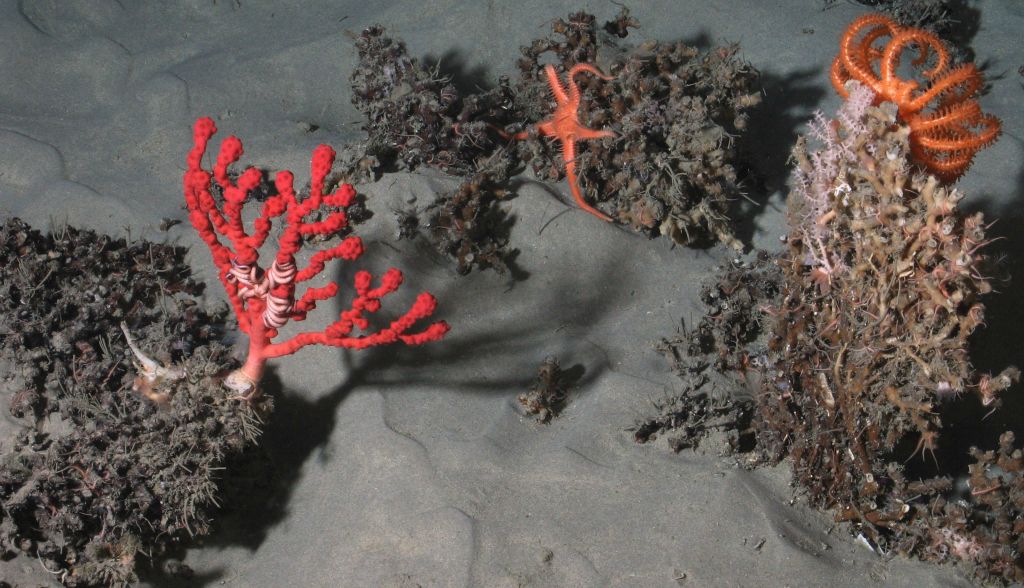
Cold water corals and seastas CREDIT IFREMERCold water corals and seastars. (French Research Institute for Exploitation of the Sea)


Sponges and corals may not seem like important animal species in the grand scheme of things, but in the deep sea they form the foundation for most ecosystems. 


Marine biologists actually refer to them as the 'cities' of the deep, providing food and shelter for many more types of fish.


In a rapidly changing world, however, these remote ecosystems appear particularly vulnerable to human activity. 


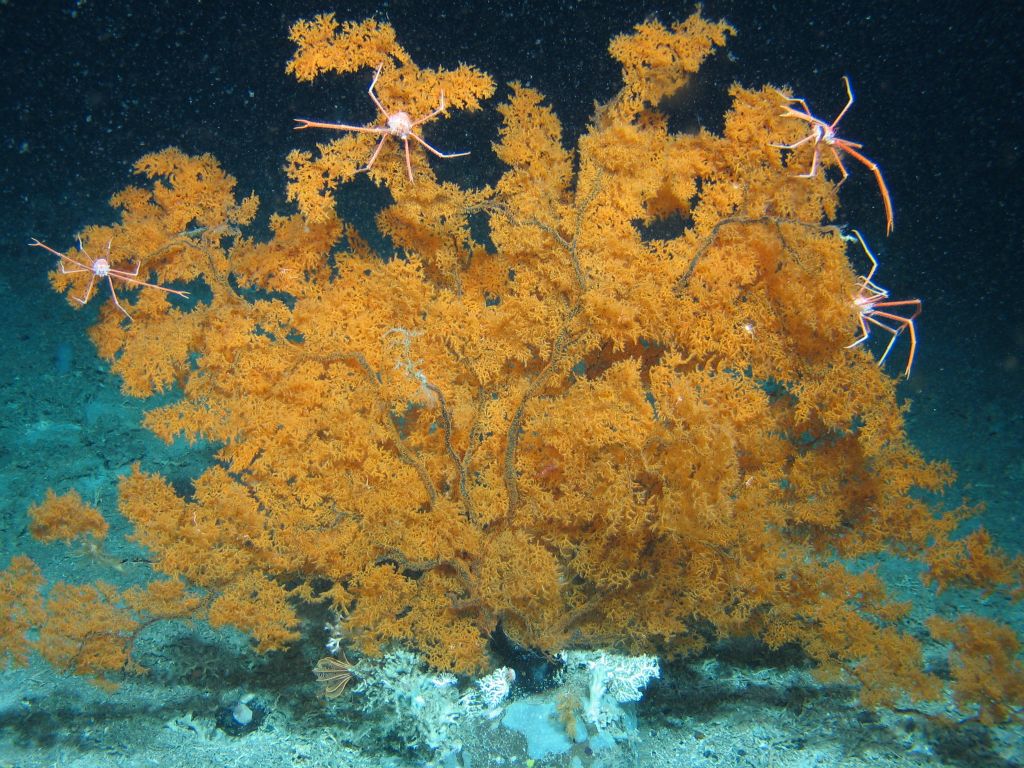
Despite their name, black corals are not always black, and while they do not bleach with high temperatures like shallower corals, climate change is still their biggest threat.


Given their propensity for growing in the deep, we still have very little information about these corals' conservation status, which means they could go extinct before we even find them. The same goes for any deep sea species they support.


Black coral and crabs at the ROCKALL BANK CREDIT UNIVERSITY OF EDINBURGHBlack coral and crabs (University of Edinburgh)


"If those cities are damaged by destructive human uses, those fish have nowhere to spawn and the function of those whole ecosystems is lost for future generations," Roberts told the BBC.


Oceans absorb up to a third of the carbon in our atmosphere, and research from the ATLAS project suggests half of all cold-water coral habitats are at risk from warming temperatures.


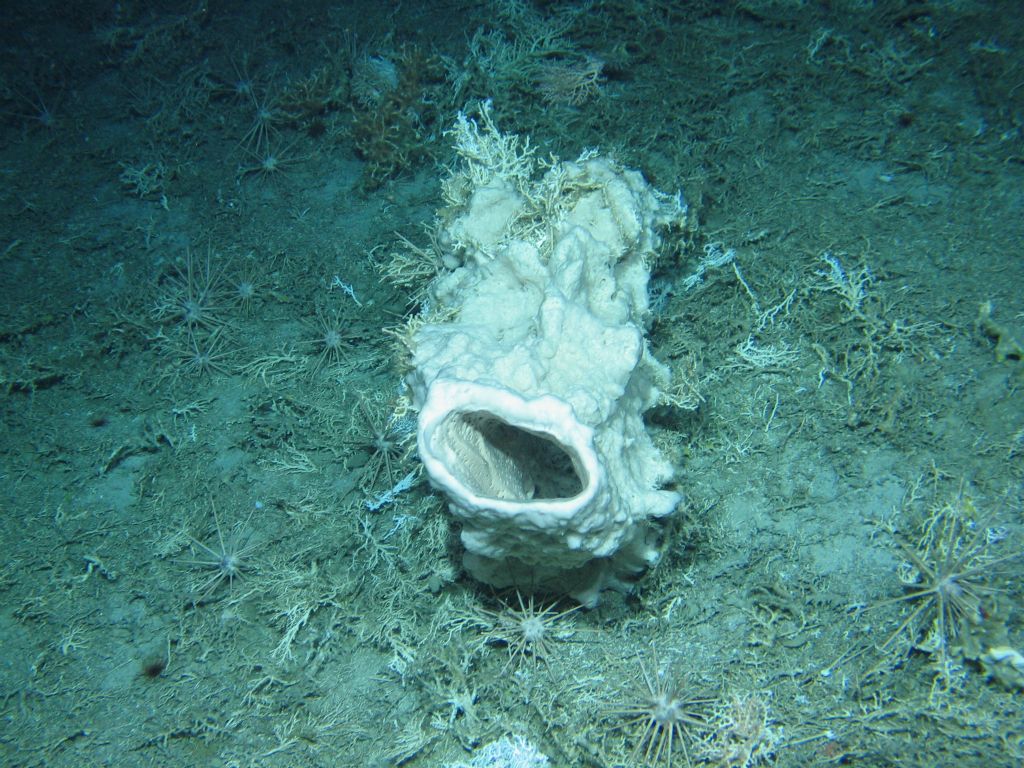
Sponge and sea urchins at the ROCKALL BANK CREDIT UNIVERSITY OF EDINBURGHSponge and sea urchins. (University of Edinburgh)


Nor is that the only threat faced by these deep sea communities. The ATLAS project found ocean acidification and fishing could also place nearly 20 percent of deep water ecosystems at high risk.


Acidification is one of the most disastrous outcomes for corals, corroding the skeleton of these reefs almost like osteoporosis in humans.


"That's attacking the very foundations of huge deep-sea coral reefs," Roberts explained to ABC News Australia. 


"Predictions are showing the suitability of the habitats really collapsing over the next 100 years." 


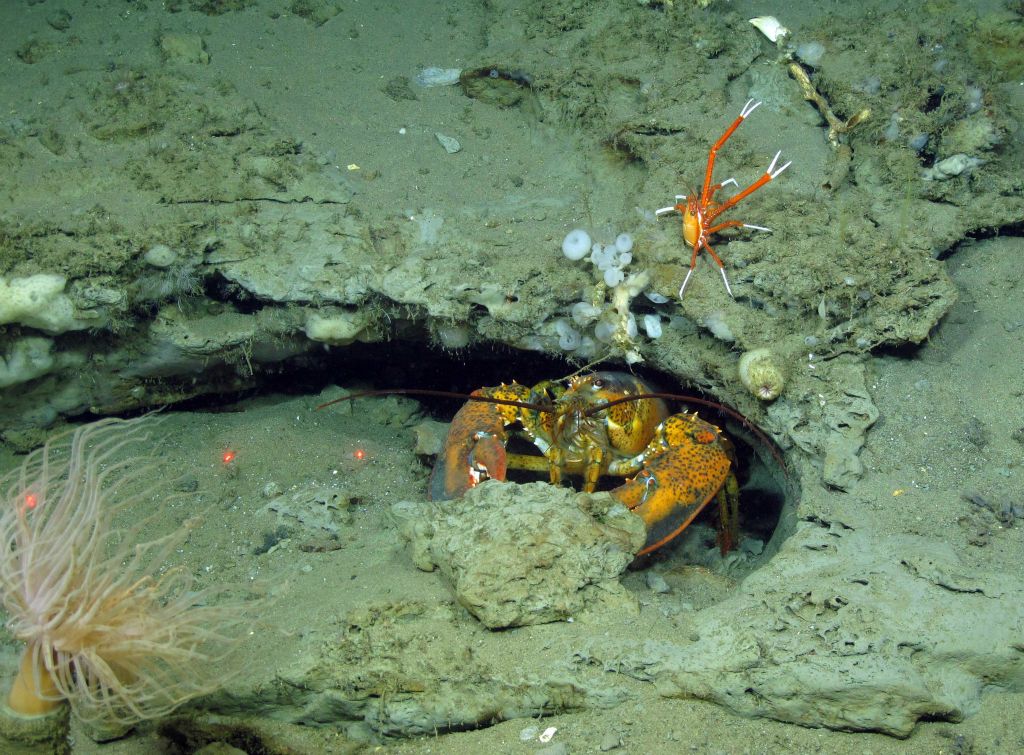
American lobster and squat lobster at Baltimore Canyon CREDIT STEVE ROSSAmerican lobster and squat lobster at Baltimore Canyon. (Steve Ross)


Even the major currents of the Atlantic are slowing with climate change, and this means the warm, salty water usually carried to the north is taking longer to cool and sink, possibly causing sea levels to rise or changing global weather patterns. It could also impact the resources deep sea ecosystems are able to access.


"Everyone knows how important it is to look after tropical rainforests and other precious habitats on land, but few realise there are just as many, if not more, special places in the ocean," says Roberts. 


"In ATLAS we've studied most vulnerable ecosystems in the deep Atlantic and we now understand how important, interconnected and fragile they really are." 


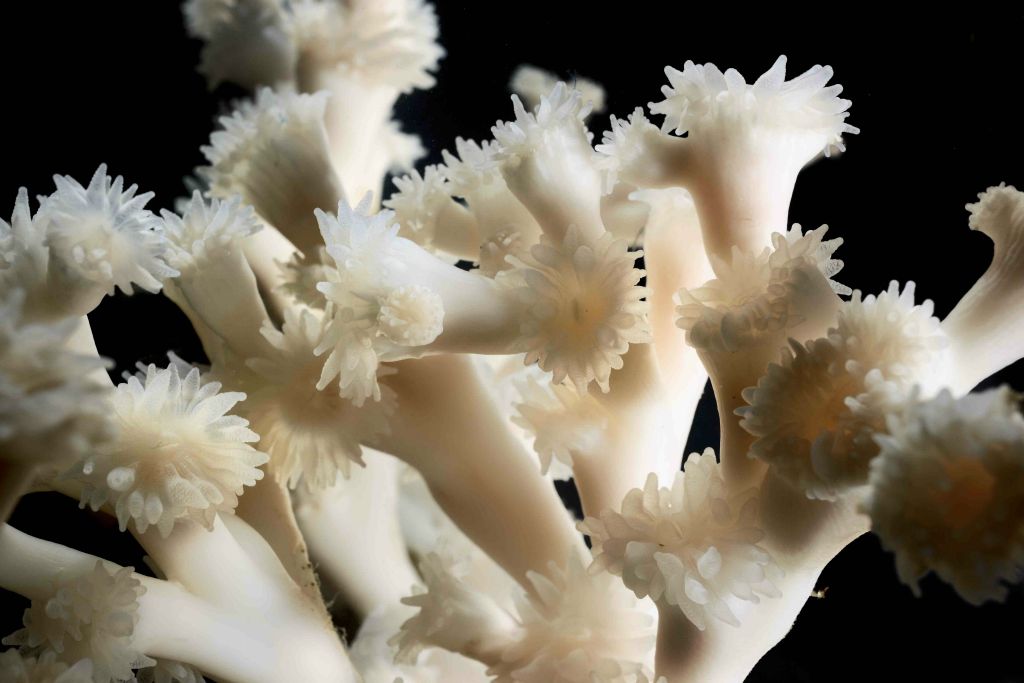
Lophelia pertusa CREDIT Solvin Zankl GEOMARLophelia pertusa, a cold water coral. (Solvin Zankl Geomar)


The massive project might be done for now, but it continues to serve as a model for other marine scientists.


Researchers in South America are already preparing to undertake a similar project in the southern Atlantic ocean, which is far less explored, and exploration is set to finish in 2023.


Who knows what treasures of the deep we'll find this time.


#Nature | https://sciencespies.com/nature/massive-unrivalled-deep-sea-project-just-discovered-a-bunch-of-new-atlantic-species/

What Ancient DNA Reveals About the First People to Populate the Caribbean

Thousands of years ago, two groups of people settled the Caribbean in distinct waves, a sweeping new DNA survey suggests.


Published in the journal Nature, the findings—drawn from the genomes of more than 250 ancient individuals—offer insights on the region’s inhabitants in the centuries prior to European invaders’ arrival.


“We now have a much clearer picture of the biological interactions that took place—or didn’t take place—between groups of genetically distinct people in the ancient Caribbean,” says study co-first author, Kendra Sirak, a geneticist at Harvard Medical School, in a statement.


The first of the two groups arrived in the Caribbean around 6,000 years ago. Archaic Age foragers hailing from Central or South America, these individuals were genetically related to the Arawak-speaking people of northeast South America. Later, around 2,500 to 3,000 years ago, a group of farmers and pottery makers known as the Ceramic Age people migrated to the area from South America. As Carl Zimmer reports for the New York Times, this new group seems to have almost totally replaced the original population, with only a small amount of genetic mixing between the groups.


Per National Geographic’s Andrew Lawler, the more than 700 islands scattered across the Caribbean were some of the last places colonized by early humans. The disappearance of most of the Archaic Age people was likely the result of violence or disease related to the newcomers. Crucially, however, this trend wasn’t universal across the region.


“The remarkable thing is that the Archaic way of life seems to survive in western Cuba until about 900 [A.D],” study co-author William Keegan, an archaeologist at the Florida Museum of Natural History, tells National Geographic. “They apparently lived unmolested and with little mixing.”


Ceramic Age art

Ceramic age people developed a variety of art in many styles. These pieces date to around 1200 A.D.

(Corinne Hofman and Menno Hoogland / Florida Museum of Natural History)


In the centuries after the Ceramic Age people’s arrival, pottery styles changed dramatically. Though researchers had previously thought that this shift coincided with the introduction of new groups from outside of the region, the ancient DNA suggests otherwise.


“The same population developed extraordinarily different artistic styles over time,” says co-first author David Reich, also a geneticist at Harvard Medical School, in the statement. “It highlights the creativity and dynamism of these ancient people.”


Reich’s lab relied on a relatively new technique: extracting DNA from a dense piece of bone in the inner ear. This allowed the team to obtain genetic material from people who lived as long as 3,100 years ago. (Due to the warm, wet climate of the Caribbean, such DNA extraction was previously impossible.)


Working in consultation with cultural institutions and representatives of local Indigenous communities, the team analyzed DNA from 174 people who lived in Venezuela and the Caribbean over a span of almost 3,000 years, as well as 89 previously sequenced samples.


The research challenges previous estimates of the population of the island of Hispaniola—modern-day Haiti and the Dominican Republic—at the time of Europeans’ arrival in the 15th century. Writing for the New York Times, Reich and Orlando Patterson, a sociologist at Harvard, note that early European settlers estimated the number of people living on the islands at one to four million. More recent scholarship has placed the population at 250,000 to one million, but the new study indicates that the number was actually closer to tens of thousands.


“This study is significant to the way in which we understand how ancient people settled this region,” co-author Michael Pateman, an archaeologist at AEX Bahamas Maritime Museum, tells the Bahamas-based Eyewitness News. “Using DNA evidence to support the findings means that the results can shed new light on how we once thought the people who settled the Caribbean and the Bahamas lived their lives during the Ceramic Age.”


#History | https://sciencespies.com/history/what-ancient-dna-reveals-about-the-first-people-to-populate-the-caribbean/

Tuesday, December 29, 2020

Soyuz launches French reconnaissance satellite in final 2020 launch

WASHINGTON — A Soyuz rocket successfully launched a French reconnaissance satellite Dec. 29 in what is likely the final launch of an active 2020 in spaceflight.


The Soyuz ST-A rocket lifted off from the Guiana Space Center in French Guiana at 11:42 a.m. Eastern, after a one-day delay because of gusty upper-level winds. The Fregat upper stage, after performing two burns, released the Composante Spatiale Optique (CSO) 2 satellite nearly one hour after liftoff.


CSO-2 was built by Airbus Space and Defence for the French military. The 3,562-kilogram satellite carries an imaging payload provided by Thales Alenia Space to provide high-resolution images at optical and infrared wavelengths, enabling observations during daytime or nighttime.


The spacecraft is the second of three satellites in the overall CSO system, after the launch of CSO-1 in December 2018. CSO-1 operates in an 800-kilometer sun-synchronous orbit to serve what French officials call a “reconnaissance” mission, while CSO-2 will operate in a 480-kilometer orbit, producing higher resolution images for an “identification” mission. A third satellite, CSO-3, is scheduled for launch in 2022 to supplement CSO-1’s reconnaissance mission.


The launch was the third Soyuz mission this month for Arianespace. A Soyuz launched from French Guiana Dec. 1 carrying the FalconEye 2 imaging satellite for the United Arab Emirates, while another Soyuz, launching from Russia’s Vostochny Cosmodrome Dec. 18, placed a set of 36 OneWeb satellites into orbit.


Arianespace conducted 10 launches in 2020 despite a nearly five-month hiatus from March to August because of the pandemic. Besides the three Soyuz launches this month, Arianespace conducted two other Soyuz launches of OneWeb satellites from the Baikonur Cosmodrome, as well as three Ariane 5 and two Vega launches from French Guiana. One of the two Vega launches, carrying two European Earth science satellites, failed in November because of improperly connected cables in the thrust vector control system of the rocket’s upper stage.


The launch is also the last scheduled orbital launch of 2020. There were 114 orbital launch attempts in the year, the same as in 2018 and up from the 102 in 2019. Ten of the 114 failed to reach orbit: four by China, four by U.S.-based companies, and one each by Iran and Europe. The United States accounted for 44 launches, including seven by Rocket Lab, a U.S.-headquartered company that launches from New Zealand. China performed 39 launches. Russian vehicles performed 17 launches, counting the two Soyuz launches from French Guiana.


#Space | https://sciencespies.com/space/soyuz-launches-french-reconnaissance-satellite-in-final-2020-launch/

These are 7 of the strangest experiments humans have ever done in space

The way things behave in microgravity may seem obvious to us now, after humans have been venturing into space for over 50 years.


But we haven't always been certain how space might affect certain things. Like fire. Or planarian worms. Or even plants. It's only by conducting experiments that we can learn the answers to these burning questions.


That has led to some pretty fascinating, sometimes upsetting, and sometimes downright wacky experiments conducted in space.


A spacesuit gets shoved out an airlock


The video above plays out like something out of a nightmare. A spacesuit floats, untethered, away from the International Space Station ISS), the vast black void of space yawning before it.


You may be relieved to learn that no humans were harmed in the making of this experiment - there's no one in the Russian Orlan spacesuit, nicknamed Ivan Ivanovitch or Mr Smith - it's stuffed with a bunch of old clothes and a radio transmitter.


The idea was that old spacesuits could be used as satellites. SuitSat-1 - officially designated AMSAT-OSCAR 54 - was deployed on 3 February 2006, but the experiment was only partially successful; reports vary, with NASA claiming the transmitter had died shortly after release and Russia reporting a final transmission a whole fortnight later. The last confirmed signal was received on 18 February.


SuitSat-1 went on to spend several months in silent orbit, before entering Earth's atmosphere and burning up on 7 September 2006.


The hammer and the feather


In the late 16th century, Galileo Galilei dropped two spheres of unequal mass from the Leaning Tower of Pisa in Italy. When both arrived on the ground at the same time, he'd countered classically established views, by showing mass had no bearing on gravitational acceleration. All objects, no matter the mass, should fall at the same rate - even if it's a feather and a hammer.


On Earth, this is tricky to demonstrate due to air resistance. But nearly 400 years later, a human standing on the Moon repeated the experiment.


On 2 August 1971, Commander David Scott of Apollo 15 took a geological hammer in one hand, and a falcon feather in the other. He raised them to a height of about 1.6 metres off the ground, and dropped them. Because the astronaut was essentially in a vacuum, without air resistance the two objects fell in sync.


"Within the accuracy of the simultaneous release, the objects were observed to undergo the same acceleration and strike the lunar surface simultaneously," wrote NASA astronaut Joe Allen, "which was a result predicted by well-established theory, but a result nonetheless reassuring considering both the number of viewers that witnessed the experiment and the fact that the homeward journey was based critically on the validity of the particular theory being tested."


The hammer and feather are both still up there.


Fizzy tablet in a water blob


In microgravity, if you squirt a bit of water out of a nozzle, it just hangs there, all blobby and wobbling.


This can result in a lot of fun. Experiments and demonstrations have included popping water balloons in the vomit comet (the plane that makes parabolic flights to create brief periods of free-fall) and the ISS, attaching a blob of water with a large bubble inside to a speaker to observe the vibrations, and putting a GoPro camera in a water blob to film it from the inside (you'll want stereoscopic 3D glasses for that one).


In 2015, astronaut Scott Kelly coloured a water blob with food colouring, then inserted effervescent tablets, watching them dissolve and release gases into the water. It was filmed using the space station's new 4K camera, so you can view the whole alien-algae-spawning... thing in gloriously crisp resolution.


Fire in space


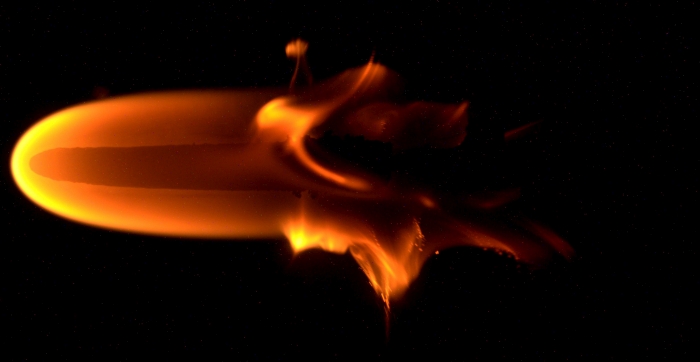
microgravity flame(ESA/NASA)


Just as water behaves differently in microgravity, so too does fire. The Mir space station fire of 1997 has thankfully been a one-off event so far, but working out how fire behaves in microgravity can help plan for fire safety for future long-term missions such as the crewed mission to Mars, and the permanent Moon base. It can help to inform fire safety protocols down here on Earth, too.


To that end, a number of ongoing research projects have studied what happens to flames in space. The Burning and Suppression of Solids experiments aboard the ISS have investigated the burning and extinction characteristics of a broad range of fuel types in microgravity. Data from these experiments can be used to build more complex models to understand the finer details of combustion in Earth gravity.


Aboard the Cygnus cargo spacecraft, scientists investigated how flames behave under different spacecraft conditions in the Saffire experiments. And NASA's Flame Design investigation - part of the Advanced Combustion via Microgravity Experiments - is exploring the production and control of soot.


All of which is very useful and interesting, sure. But it's also insanely beautiful, and we bet there are some astronauts having an absolute blast playing with fire in space.


Space spiders


In 2011, scientists set about answering the burning question: Can spiders adapt to space travel? They sent two golden silk orb-weaver spiders (Trichonephila clavipes), Esmeralda and Gladys, for a 45-day sojourn aboard the ISS.


They were kept in a nice habitat (can you imagine spiders loose on a space station), with light conditions to simulate a night-day cycle, temperature and humidity control, and a healthy diet of juicy fruit flies.


Both spiders adapted beautifully, continuing to spin their webs and hunt their food. Orb weavers eat their webs at the end of each day to regain protein, and spin them again in the morning; this, too, the spiders continued to do right on schedule, which was interesting, since different orb weaver species on the ISS just spun their webs at any old time of day.


But not everything was totally normal. In microgravity, the spiders spun their webs differently - flatter and rounder, compared to the more three-dimensional, asymmetrical structures the orb-weavers spin on Earth.


The two spiders returned to Earth at the end of their stay in space. Esmeralda perished on the return journey, having lived a normal spider lifespan. Gladys returned home hale, but turned out to be a boy. He was renamed Gladstone.


Tortoises go round the Moon


Back in the 1960s, before humans had been to the Moon, it wasn't clear exactly how - if at all - getting up close and personal with the Moon would affect us physically. So, in 1968, the Soviet space program sent two Russian tortoises (Agrionemys horsfieldii) up for a trip round Earth's companion.


Actually, it wasn't just tortoises. Included in the flight were wine flies, mealworms, seeds, plants, algae and bacteria. There was also a dummy fitted with radiation sensors, since none of the living organisms aboard were remotely analogous to humans. Tortoises, according to a 1969 report, seem to have been chosen because they're relatively easy to strap down.


The two unnamed reptilian cosmonauts were placed onboard the Zond-5 spacecraft on 2 September 1968, at which point they were no longer fed. They were launched into space on 15 September 1968, returning back to Earth (in the Indian ocean) on 21 September. They finally returned to Moscow on 7 October.


Their journey included seven days of spaceflight, several days in tropical climates (including bobbing about in the ocean while they waited for retrieval) and transportation back to Russia. Ultimately, they spent 39 days without food. It would try anyone.


Control tortoises that remained on Earth were also deprived of food for the same time period. A comparison of the two sets of tortoises revealed that any changes in the space-faring reptiles were mostly the result of starvation, with a small contribution from spaceflight-related atrophy.


We'd like to say that no one ever sent tortoises to space again, but sadly, two more tortoise missions took place. Zond 7 in 1969 carried tortoises. In 1975, the Soyuz 20 spacecraft ferried a tortoise around for 90 days. And two tortoises flew on the Salyut-5 space station in 1976.


Moon Trees


Just as we once didn't know how space would affect animals, so too were we unaware of its effects on plants. So when the Apollo 14 mission launched on 31 January 1971, its cargo contained something we might now consider a bit peculiar: roughly 500 seeds.


Scientists from the US Forest Service wanted to know if tree seeds that had flown in microgravity and been subjected to space radiation would sprout, grow and look the same as seeds that had never left Earth.


Five species of tree were included in the cannister: loblolly pine (Pinus taeda), California redwood (Sequoia sempervirens), American sycamore (Platanus occidentalis), Douglas fir (Pseudotsuga menziesii), and American sweet gum (Liquidambar styraciflua). They accompanied command module pilot Stuart Roosa on 34 orbits of the Moon before returning to Earth.


The seeds were then planted and tended, and most of them survived to grow into saplings, alongside controls that had never left Earth. Unsurprisingly to us now, there was no discernible difference between the two.


By 1975, the Moon Trees, as they had come to be known, were large enough to be transplanted, and they were shipped all over America. According to this NASA website, less than 100 Moon Trees can be accounted for today, and of those, only 57 were living when the page was put together.


That means there could potentially be hundreds of Moon Trees hiding across the US, a lost relic of a time when our curiosity sent tiny seeds whizzing around space. And we think that's beautiful.


#Space | https://sciencespies.com/space/these-are-7-of-the-strangest-experiments-humans-have-ever-done-in-space/