Featured Post

Tracking air pollution disparities -- daily -- from space

Studies have shown that pollution, whether from factories or traffic-snarled roads, disproportionately affects communities where economicall...

Tuesday, November 2, 2021

Humans have compressed millions of years of natural change into mere centuries

Many numbers are swirling around the climate negotiations at the UN climate summit in Glasgow, COP26. These include global warming targets of 1.5°C and 2.0°C, recent warming of 1.1°C, remaining CO2 budget of 400 billion tonnes, or current atmospheric CO2 of 415 parts per million.


It's often hard to grasp the significance of these numbers. But the study of ancient climates can give us an appreciation of their scale compared to what has occurred naturally in the past. Our knowledge of ancient climate change also allows scientists to calibrate their models and therefore improve predictions of what the future may hold.

Recent work, summarized in the latest report of the Intergovernmental Panel on Climate Change (IPCC), has allowed scientists to refine their understanding and measurement of past climate changes.

These changes are recorded in rocky outcrops, sediments from the ocean floor and lakes, in polar ice sheets, and in other shorter-term archives such as tree rings and corals.

As scientists discover more of these archives and get better at using them, we have become increasingly able to compare recent and future climate change with what has happened in the past, and to provide important context to the numbers involved in climate negotiations.

For instance one headline finding in the IPCC report was that global temperature (currently 1.1 °C above a pre-industrial baseline) is higher than at any time in at least the past 120,000 or so years.


That's because the last warm period between ice ages peaked about 125,000 years ago – in contrast to today, warmth at that time was driven not by CO2, but by changes in Earth's orbit and spin axis.

Another finding regards the rate of current warming, which is faster than at any time in the past 2,000 years – and probably much longer.

But it is not only past temperature that can be reconstructed from the geological record. For instance, tiny gas bubbles trapped in Antarctic ice can record atmospheric CO2 concentrations back to 800,000 years ago. Beyond that, scientists can turn to microscopic fossils preserved in seabed sediments.

These properties (such as the types of elements that make up the fossil shells) are related to how much CO2 was in the ocean when the fossilized organisms were alive, which itself is related to how much was in the atmosphere.

As we get better at using these "proxies" for atmospheric CO2, recent work has shown that the current atmospheric CO2 concentration of around 415 parts per million (compared to 280 ppm prior to industrialization in the early 1800s), is greater than at any time in at least the past 2 million years.


Other climate variables can also be compared to past changes. These include the greenhouse gases methane and nitrous oxide (now greater than at any time in at least 800,000 years), late summer Arctic sea ice area (smaller than at any time in at least the past 1,000 years), glacier retreat (unprecedented in at least 2,000 years) sea level (rising faster than at any point in at least 3,000 years), and ocean acidity (unusually acidic compared to the past 2 million years).

In addition, changes predicted by climate models can be compared to the past. For instance an "intermediate" amount of emissions will likely lead to global warming of between 2.3°C and 4.6°C by the year 2300, which is similar to the mid-Pliocene warm period of about 3.2 million years ago.

Extremely high emissions would lead to warming of somewhere between 6.6°C and 14.1°C, which just overlaps with the warmest period since the demise of the dinosaurs – the "Paleocene-Eocene Thermal Maximum" kicked off by massive volcanic eruptions about 55 million years ago.

As such, humanity is currently on the path to compressing millions of years of temperature change into just a couple of centuries.

Distant past can held predict the near future

For the first time in an IPCC report, the latest report uses ancient time periods to refine projections of climate change. In previous IPCC reports, future projections have been produced simply by averaging results from all climate models, and using their spread as a measure of uncertainty.

But for this new report, temperature and rainfall and sea level projections relied more heavily on those models that did the best job of simulating known climate changes.

Part of this process was based on each individual model's "climate sensitivity" – the amount it warms when atmospheric CO2 is doubled. The "correct" value (and uncertainty range) of sensitivity is known from a number of different lines of evidence, one of which comes from certain times in the ancient past when global temperature changes were driven by natural changes in CO2, caused for example by volcanic eruptions or change in the amount of carbon removed from the atmosphere as rocks are eroded away.

Combining estimates of ancient CO2 and temperature therefore allows scientists to estimate the "correct" value of climate sensitivity, and so refine their future projections by relying more heavily on those models with more accurate climate sensitivities.

Overall, past climates show us that recent changes across all aspects of the Earth system are unprecedented in at least thousands of years.

Unless emissions are reduced rapidly and dramatically, global warming will reach a level that has not been seen for millions of years. Let's hope those attending COP26 are listening to messages from the past. The Conversation

Dan Lunt, Professor of Climate Science, University of Bristol and Darrell Kaufman, Professor of Earth and Environmental Sciences, Northern Arizona University.

This article is republished from The Conversation under a Creative Commons license. Read the original article.


#Humans | https://sciencespies.com/humans/humans-have-compressed-millions-of-years-of-natural-change-into-mere-centuries/

'Genetic goldmine' in Earth's harshest desert could be the key to feeding the future

It's not easy for life in Chile's unforgiving Atacama desert: a harsh, hostile place renowned for being the planet's driest non-polar desert.

Yet against the odds, life somehow survives in these barren badlands, which have a history of farming stretching back thousands of years.


Identifying the mechanisms behind these unlikely successes is a task that's more important today than perhaps ever before, as it could reveal the secrets of making food grow in a world becoming hotter and drier with every passing year.

In a new study, scientists have discerned some of those hidden tricks, discovering the genetic underpinnings of a range of adaptations that enable plant life to prosper even in the withering, extreme conditions of the Atacama desert.

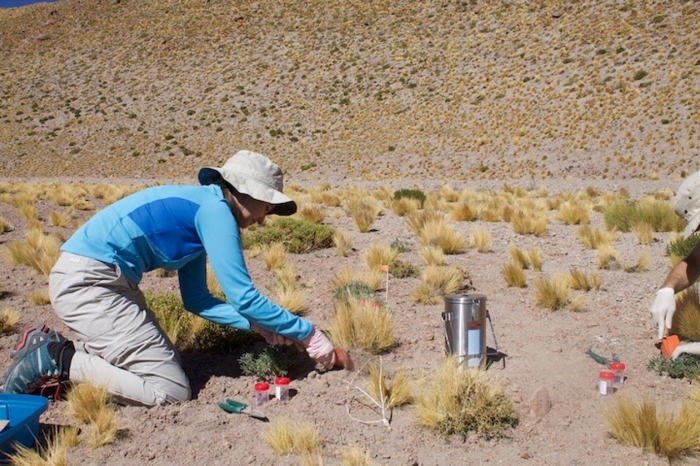
""Researcher Gabriela Carrasco studies plant samples in the Atacama Desert. (Melissa Aguilar)

"In an era of accelerated climate change, it is critical to uncover the genetic basis to improve crop production and resilience under dry and nutrient-poor conditions," says plant systems biologist Gloria Coruzzi from New York University.

Over a period of 10 years, Coruzzi and an international team of researchers studied Atacama plant life in 22 sites within the desert landscape, both in situ, and off site as well – carefully ferrying plant and soil samples back to the lab, frozen in liquid nitrogen to preserve them for genomic analysis.

In total, 32 of the most dominant plants in the desert had their transcriptomes sequenced, which were then compared with 32 closely related species from other locations, none featuring genetic adaptations to Atacama's environment.


"The goal was to use this evolutionary tree based on genome sequences to identify the changes in amino acid sequences encoded in the genes that support the evolution of the Atacama plant adaptation to desert conditions," Coruzzi says.

The comparison technique – an example of what's called phylogenomics – yielded 265 positively selected genes, suggesting they correlated with mutations that might confer advantages in the Atacama desert.

Further analysis revealed 59 of these genes also show up in one of the most-studied model organisms in plant biology, Arabidopsis, in which they have been linked to physiological and molecular processes that can enhance plant resilience in extreme environmental conditions, the researchers say.

In other words, these genes – which are positively selected in Atacama desert plants – are already known to enable Arabidopsis to withstand high radiation and temperature stress, regulate floral development and flowering time, help defend against pathogens, and assist with water and nutrient uptake.

From the sounds of it, that almost reads like an evolutionary toolkit for how to survive as a plant in one of the most inhospitable environments on Earth, and the good news is that some of the same genetics can be found in food crop species too – which means we might have a better idea of what crops to plant where as the world warms, and also how best to breed, tweak, and future-proof them.

The work "is directly relevant to regions around the world that are becoming increasingly arid, with factors such as drought, extreme temperatures, and salt in water and soil posing a significant threat to global food production," says senior author and plant systems biologist Rodrigo Gutiérrez from the Pontifical Catholic University of Chile.

"As some Atacama plants are closely related to staple crops, including grains, legumes, and potatoes, the candidate genes we identified represent a genetic goldmine to engineer more resilient crops, a necessity given the increased desertification of our planet."

The findings are reported in PNAS.


#Nature | https://sciencespies.com/nature/genetic-goldmine-in-earths-harshest-desert-could-be-the-key-to-feeding-the-future/

Past 7 years in a row were hottest on record, harrowing WMO report confirms

The United Nations Secretary-General has called 2021 "the make it or break it year" for climate action.

2021 is not over yet, but a provisional report on the state of the planet suggests we are leaning heavily towards breaking it.


Experts at the UN's World Meteorological Organization (WMO) recently calculated the last seven years have been the warmest on record.

We only have data for the first nine months of 2021, but the initial analysis suggests it will likely rank either the fifth, sixth, or seventh warmest year of those seven.

The main reason it won't be warmer is because earlier this year, the cooling effects of La Niña kicked in.

The trend since 2015, however, is clear: In just seven years, there has been a rapid and long-term rise in global temperatures, sea level rise, ocean warming, and acidification.

At the current rate of greenhouse gas emissions, the report calculates the world will warm by at least 1.5 to 2 degrees Celsius come the end of the century.

The global mean temperature from January to September 2021 was already about 1.09 °C above the pre-industrial average, which means we don't have much wiggle room left.

"We are still significantly off-schedule to meet the goals of the Paris Agreement. This year has seen fossil fuel emissions bounce back, greenhouse gas concentrations continuing to rise and severe human-enhanced weather events that have affected health, lives and livelihoods on every continent," wrote the UN Secretary-General, Antonio Guterres, in a foreword for the report.

"Unless there are immediate, rapid and large-scale reductions in greenhouse gas emissions, limiting warming to 1.5 °C will be impossible, with catastrophic consequences for people and the planet on which we depend."

The report was released at the start of the UN Climate Change negotiations, currently being held in Glasgow, Scotland. Known as COP26 for short, the conference will ultimately decide how the world will progress in this pivotal moment, so it's important we know where we're at. 

The snapshot provided by the WMO report, which is considered a flagship scientific document, is alarming on pretty much every level.


In 2020, despite a global pandemic which briefly slowed emissions, the report reveals greenhouse gas concentrations in the atmosphere hit all new highs. Carbon dioxide had increased 150 percent since pre-industrial levels, methane had increased 262 percent, and nitrous oxide 123 percent.

Climate data from the start of 2021 suggest this year saw a slight dip from La Niña, but compared to the last La Niña event in 2011, this year also appears significantly warmer.

Given rising global temperatures across the board, even years of La Niña, it's no surprise that sea ice in the East Greenland Sea hit a record low this year. But it's still shocking.

In August, researchers recorded the first-ever rainfall on the summit of the Greenland Ice Sheet, and it lasted for hours. Usually, this summit only ever receives snow.

In the ocean, things aren't much better. Warming, sea level rise and acidification are steadily worsening with time.

The report found ocean acidification hasn't been at this level for at least 26,000 years, and it's impacting the ocean's ability to store carbon dioxide from the atmosphere, making the climate crisis above the waves even worse.


"From the ocean depths to mountain tops, from melting glaciers to relentless extreme weather events, ecosystems and communities around the globe are being devastated," warns Guterres. 

"COP26 must be a turning point for people and planet."

In the past nine months, the world has experienced numerous wildfires, several extreme heat waves, cyclones, hurricanes, droughts, and some severely cold weather events, too.

In Bangladesh, monsoon rains were so bad this summer, several refugee sites were flooded, displacing more than 25,000 people who had already lost their homes before.

We must build back better

Emerging research suggests climate change will only make extreme weather events like these more frequent and severe. 

"Months' worth of rainfall fell in the space of hours in China, and parts of Europe saw severe flooding, leading to dozens of casualties and billions in economic losses," recalls WMO Secretary-General Petteri Taalas.

"A second successive year of drought in sub-tropical South America reduced the flow of mighty river basins and hit agriculture, transport and energy production. Extreme events are the new norm."

Taalas argues nations not only need to significantly cut their emissions, but also prepare for the realities ahead that are already locked in. Investing in climate adaptation is one of the best ways to save lives and livelihoods from extreme weather events in the future, he says.


"Throughout the pandemic we have heard that we must build back better to set humanity on a more sustainable path and to avoid the worst impacts of climate change on society and economies," continues Taalas.

"This report shows that so far in 2021 we are not going in the right direction."

Here's to hoping leaders at COP26 can turn this ship around.

The WMO provisional report can be easily read in the form of a story map


#Environment | https://sciencespies.com/environment/past-7-years-in-a-row-were-hottest-on-record-harrowing-wmo-report-confirms/

New horrifying secrets of Peru's ancient civilizations unearthed in the Andes

The foothills of the Andes mountains are revealing their bloody secrets: the ancient skeletons of sacrificed children.

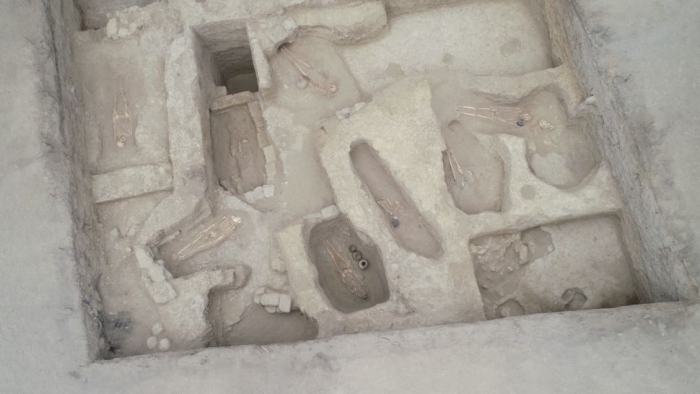
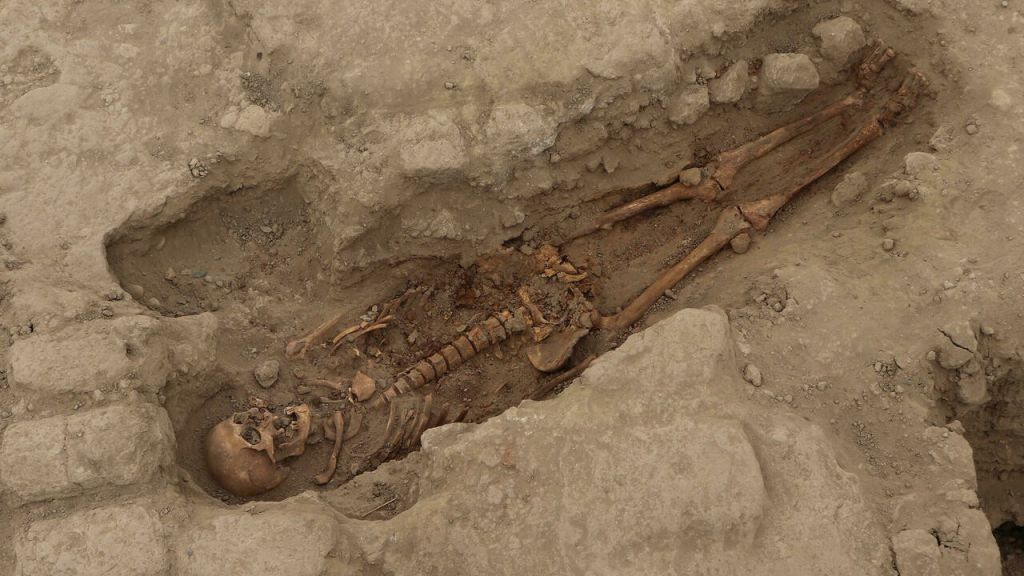
Archaeologists have unearthed 29 human bodies entombed approximately 1,000 years ago at Huaca Santa Rosa de Pucalá, an archaeological site in the Lambayeque region of northwestern Peru.


Four of the skeletons – belonging to two children, a teenager and one adult – date to the Wari culture.

These four skeletons represent the region's first known examples of human offerings from the Wari civilization, Edgar Bracamonte Lévano, the excavation's director and research archaeologist with the Royal Tombs of Sipán museum, told Live Science in an email.

""An overhead view of the excavation site. (Edgar Bracamonte Lévano)

In addition to human remains, the excavation uncovered skeletons from eight guinea pigs, as well as several alpacas and llamas, all of which were likely sacrificed. They also uncovered pots, bottles, and a knife with a half moon-shaped blade.

Related:Photos: the amazing mummies of Peru and Egypt

Bracamonte Lévano recognized the tombs as Wari because they were surrounded by three distinctive, D-shaped enclosures typical of the culture's religious spaces.

The human offerings may have been "part of a possible ritual carried out at the time of starting the construction of these Wari-style religious spaces," he said.

In addition to the four human offerings, the archaeological team uncovered a fifth individual who had undergone secondary burial. "That is to say, he was buried elsewhere and [then] reburied inside the D-shaped enclosure," Bracamonte Lévano said.

 A human skeleton unearthed at Huaca Santa Rosa de Pucalá (Edgar Bracamonte Lévano) A human skeleton unearthed at Huaca Santa Rosa de Pucalá (Edgar Bracamonte Lévano)

The Wari civilization flourished along the mountains and coasts of modern-day Peru from around AD 500 to 1000. Wari people were known for their finely woven textiles and sculpted pottery, as well as their roads and terraced agriculture, according to the World History Encyclopedia. These roads would later be incorporated into parts of the Inca Empire.

While the exact structure of Wari society remains open to debate, archaeologists have found evidence suggesting that religion was deeply intertwined with politics and that women were included at the highest levels of governance, as Live Science previously reported.


The other 25 skeletons found buried – though not sacrificed – at the site belonged to the Mochica, or Moche, culture. This civilization thrived in what is now Lambayeque from around AD 100 to 700, and would later be supplanted by the Wari.

Unlike Wari art, which tends toward abstract shapes and patterns, Moche art is famous for its more literal, naturalistic style. That makes artifacts from the two cultures easily distinguishable, Bracamonte Lévano said. 

Among the most significant Moche discoveries in recent years is the Lady of Cao mummy, a tattooed noblewoman whose forensic reconstruction was the subject of a 2017 National Geographic documentary.

The Lord of Sipán, another famous Moche mummy discovered in 1987, resides in the Royal Tombs of Sipán Museum under Bracamonte Lévano's watchful eye. 

Related content:

Image gallery: Inca child mummies

Album: digging up Incan fortresses

In photos: Moche treasures hidden in Peru temple

This article was originally published by Live Science. Read the original article here.


#Humans | https://sciencespies.com/humans/new-horrifying-secrets-of-perus-ancient-civilizations-unearthed-in-the-andes/

Monday, November 1, 2021

An undisclosed 'medical issue' just delayed the next crewed SpaceX launch

NASA and SpaceX on Monday delayed for the second time a mission to send four astronauts to the International Space Station due to a "minor medical issue" with a crew member.

"The issue is not a medical emergency and not related to COVID-19," NASA said in a statement, without giving further details.


The members of "Crew-3" – US astronauts Raja Chari, Kayla Barron and Tom Marshburn, as well as German astronaut Matthias Maurer – will remain in quarantine at the Kennedy Space Center until their launch, the statement said.

The crew were originally due to launch aboard a Crew Dragon spacecraft named Endurance fixed atop a Falcon 9 rocket from the Kennedy Space Center in Florida on Sunday, October 31.

But the day before, the flight was postponed to Wednesday to avoid "a large storm system."

The launch is now scheduled for Saturday, November 6 at 11:36 pm local time (0336 GMT Sunday), from Cape Canaveral in Florida.

NASA did not specify which astronaut was affected by the medical issue.

Crew-3 is part of NASA's multibillion-dollar partnership with SpaceX that it signed after ending the Space Shuttle program in 2011 and aims to restore US capacity to carry out human spaceflight.

The team will replace four Crew-2 astronauts, including Frenchman Thomas Pesquet, who have been on the International Space Station (ISS) since April.


Crew-3 will spend six months on the orbital outpost and conduct research to help inform future deep space exploration and benefit life on Earth.

Scientific highlights of the mission include an experiment to grow plants in space without soil or other growth media, and another to build optical fibers in microgravity, which prior research has suggested will be superior in quality to those made on Earth.

The Crew-3 astronauts will also conduct spacewalks to complete the upgrade of the station's solar panels and will be present for two tourism missions, including Japanese visitors aboard a Russian Soyuz spacecraft at the end of the year and the Space-X Axiom crew, set for launch in February 2022.

Crew-2 had originally been set to return to Earth in early November, but NASA said Monday it would "continue to evaluate" possible dates for their return.

"Mission teams are reviewing options including both direct and indirect handovers for the upcoming crew rotation," NASA said. 

© Agence France-Presse


#Space | https://sciencespies.com/space/an-undisclosed-medical-issue-just-delayed-the-next-crewed-spacex-launch/

Snakes more likely to inbreed and lose ability to adapt due to urbanization

Curtin University research has found that isolated Perth tiger snake populations, such as those surrounded by urban development or seawater, are more likely to resort to inbreeding than those in less 'cut off' communities.


A research team including lead author PhD candidate Mr Damian Lettoof and project supervisor Research Associate Dr Brenton von Takach, both from the School of Molecular and Life Sciences at Curtin, found Western tiger snake populations that were more geographically isolated were less genetically diverse than expected.


Mr Lettoof said the research focussed on six tiger snake populations across urban areas of the Swan Coastal Plain, and one offshore island.


"Tiger snake populations north of the Perth rivers at Herdsman Lake, Lake Joondalup and Yanchep National Park were found to lack genetic diversity while wetlands south of the Swan/Canning River system were home to the most genetically diverse populations of snakes, meaning they were less prone to inbreeding," Mr Lettoof said.


"If tiger snake populations isolated by urbanisation are suffering from lower genetic diversity, they can lose their ability to adapt in order to survive ever-changing environments due to development, pollution and climate change."


Mr Lettoof said populations north of the Perth rivers showed less genetic diversity likely because of a greater history of isolation from the rest of the species broader population.


"This is probably due to them being unable to cross unsuitable habitat such as large rivers, arid areas, and now the urban landscape," Mr Lettoof said.


"Tiger snakes are near the top of their food chain and have very specific habitat requirements, meaning a wetland with a snake population lacking in genetic diversity was indicative of an ecosystem that was not healthy or well-functioning.


"This means many other small species -- such as frogs, lizards and fish -- living in these wetlands that are increasingly being 'cut off' by urban development may also be suffering and at risk of population decline and even extinction.


"Our research suggests larger wetlands being encroached upon by urbanisation such as those on the Swan coastal plain need to be managed as 'islands' of urban biodiversity in order to protect the animal communities inhabiting them."


Story Source:


Materials provided by Curtin University. Original written by Lucien Wilkinson. Note: Content may be edited for style and length.


#Nature | https://sciencespies.com/nature/snakes-more-likely-to-inbreed-and-lose-ability-to-adapt-due-to-urbanization/

Study shows how 1.5°C temperature rise can cause significant changes in coastal species

A temperature increase of around 1.5°C -- just under the maximum target agreed at the COP23 Paris meeting in 2017 -- can have a marked impact on algae and animal species living on UK coastlines, new research has found.


The study, by ecologists at the University of Plymouth, examined how increases in rock surface temperature were affecting the quantity and behaviour of species commonly found on the shorelines of Devon and Cornwall.


It focused on two sites on the region's north coast (at Bude and Croyde) and two on the south coast (Bantham and South Milton Sands), all of which have deep gullies with both north-facing and south-facing surfaces.


Their findings showed the average annual temperature on the south-facing surfaces at low tide was 1.6°C higher than those facing north and that temperature extremes (i.e. > 30°C) were six-fold more frequent on south-facing aspects.


Across the four sites, these differences had a significant effect on species abundance with 45 different species found on north-facing sites during the summer of 2018 compared to 30 on south-facing ones.


In winter, the figures were 42 and 24 respectively, while some species -- including the red seaweed Plumaria plumosa and sea cauliflower (Leathesia marina) -- were restricted to north-facing surfaces.


The different temperatures also had an impact on species' breeding patterns with five times more dog whelk (Nucella lapillus) eggs found on north-facing surfaces than south-facing ones.


And while limpet reproduction generally occurred earlier on south-facing surfaces, these key grazers also exhibited greater levels of stress.


The research, published in Marine Environmental Research, is the first to explore the association between temperature and site geography on species abundance, physiology and reproductive behaviour in coastal areas.


Its authors say it provides evidence of how temperature variation at local scales can affect species while also offering an insight as to how future changes in global temperatures might have a negative impact over the coming decades.


The research was led by Dr Axelle Amstutz as part of her PhD, working alongside Associate Professor of Marine Ecology Dr Louise Firth, Professor of Marine Zoology John Spicer, and Associate Professor in Plant-Animal Interactions Dr Mick Hanley.


Dr Hanley, the study's senior author, said: "We have all heard for some time about the importance of limiting average global temperature increases to 1.5°C, and it will undoubtedly be one of the key topics discussed at the forthcoming COP26 conference. This study shows the impact even that kind of increase could have on important species that contribute to the health and biodiversity of our planet. As such, it does add to overwhelming evidence of the threats posed by human-induced climate change.


"However, more than that, it shows how the pressure on different species can change even within individual locations. For example, we recorded a temperature of 42.5°C on a south-facing surface at Croyde at the same time as 22.5°C was measured on the opposite north-facing side. We believe this shows such sites can be used as a 'natural laboratory' to inform and predict how species and habitats might respond to climate change over the coming decades."


Story Source:


Materials provided by University of Plymouth. Note: Content may be edited for style and length.


#Nature | https://sciencespies.com/nature/study-shows-how-1-5c-temperature-rise-can-cause-significant-changes-in-coastal-species/