Featured Post

Tracking air pollution disparities -- daily -- from space

Studies have shown that pollution, whether from factories or traffic-snarled roads, disproportionately affects communities where economicall...

Wednesday, March 31, 2021

Space industry relieved to see National Space Council retained

WASHINGTON — The Biden administration’s decision to continue the National Space Council has won approval, and relief, from the space industry, who see it as the latest sign that the White House is not contemplating major changes to space policy.


A National Security Council spokesman said March 29 that the council would continue in the new administration. The details of how the council will operate have yet to be worked out, but the spokesman said it will focus on space-related priorities of the administration, from addressing climate change to developing norms of responsible behavior in space.


Asked about the council at a March 30 briefing, White House press secretary Jen Psaki said that President Biden believed the council “provides an opportunity to generate national space policy strategies, synchronize on America’s space activities, at a time of unprecedented activity.”


Many in the space community had lobbied the administration to retain the council, which the Trump administration reestablished in 2017 after a hiatus of nearly a quarter century. They cited the benefits of having an interagency organization in place to coordinate policy on issues that don’t neatly fit into the purview of a single agency.


The council’s future had been in doubt after a Feb. 4 memo by the National Security Council that suggested it would take over space policy development. That memo stated that “national security memorandums” would replace the space policy directives that the National Space Council issues in the Trump administration. It also hinted that the Office of Science and Technology Policy would play a bigger role in civil space policy development.


Industry groups backed the administration’s decision to retain the council. “A whole-of-government approach through a body such as the space council, with clear objectives stemming from the White House and informed by the broader community, will provide the necessary forum to ensure the continued coordination of space policy,” said Andrew Allen, acting president and chief executive of the Coalition for Deep Space Exploration, in a March 30 statement.


“We believe a White House-level focus on space is crucial to provide stability and continuity to U.S. space endeavors, enabling historic exploration and scientific achievement, continued U.S. space industry global leadership, and enhanced national security,” said Dan Dumbacher, executive director of the American Institute of Aeronautics and Astronautics, in a March 30 statement.


He also recommended the continuation of the council’s Users’ Advisory Group, which he said “brings critical stakeholder input to the council.” Industry sources say they do expect, if the council is continued, that there will be some turnover in its membership.


The decision to retain the National Space Council is the latest sign that the Biden administration will provide continuity, at least at the highest level, in national space policy. In the weeks after taking office in January, the administration gave its support for both retaining the U.S. Space Force and continuing NASA’s Artemis lunar exploration program, both established during the Trump administration.


Asked at the White House briefing if this meant space was the rare issue where President Biden agreed with his predecessor, Psaki concurred. “That sounds accurate to me,” she said. “I think it’s fair to say he agrees with the past administration’s maintaining the program.”


When he served as NASA administrator in the Trump administration, Jim Bridenstine often referred to political risk, including changes to programs from one president to the next, as the biggest risk facing Artemis. That is no longer the case, he now says.


“That risk is likely largely mitigated at this point, which, by the way, is not the standard for the last 30 years,” he said during a March 30 NewSpace investor event by Canaccord Genuity.


Bridenstine again endorsed the White House’s nomination of former senator Bill Nelson as the agency’s next administrator. “I fully support him because he does know how the Senate works, he has great relationships on both sides of the aisle, and he’s going to be able to advocate strongly for the president’s agenda,” he said of Nelson. “I think he’s a good pick.”


“To see this transition happened the way it has happened makes me very, very happy,” he said.


#Space | https://sciencespies.com/space/space-industry-relieved-to-see-national-space-council-retained/

Physicists just crushed a new record for slowing down antimatter

In a mirror Universe where time runs backwards, swapping matter for antimatter should simply bring us full circle and reproduce the reality we're all familiar with. Our Universe and the bizarro antimatter Mirrorverse would look identical.


But what if it didn't? As unlikely as that would be in today's physics, the possibility might open a whole new landscape for researchers to explore, making it a question worth our time pursuing.

Unfortunately antimatter isn't the easiest thing to study. It's a pain to produce, prone to vanishing in a puff of gamma rays when it meets ordinary matter, and even when you collect enough to examine, it's zooming around at breakneck speeds.

For some studies, this isn't necessarily a huge problem. But if you want to, say, measure gravity's soft pull on its tiny particles, it really ought to be sitting as still as possible.

The ALPHA experiment at the European Organization for Nuclear Research (CERN) has been working on a way to slam the brakes on antimatter particles for a few years now through a clever application of carefully tuned lasers.

Those experiments have finally borne fruit, successfully slowing antihydrogen particles (the antimatter counterpart to hydrogen, the lightest of all elements) from the speed of a Formula 1 racer to the pace of a car cruising down a suburban street.


We've already managed to bring ordinary matter to a virtual standstill by mixing and matching a variety of methods that funnel energy out of their immediate environment. Slowing antimatter is more of a challenge, demanding methods that don't include it bumping into particles of matter, since this would result in it immediately disintegrating into a flash of radiation.

Decelerator technology has already managed to slow whole atoms of antimatter from near light speed to something more manageable in recent decades. It's enough to allow physicists to conduct at least a few tests, such as teasing apart the spectrum of antihydrogen.

So far results from these studies have shown hydrogen and antihydrogen are more or less identical, aside from their flipped charges. Which is a bit disappointing really – any difference might tell us why one form of matter has persisted over the other to create the Universe we've all come to know and love.

Still, there's a distant chance that in spite of having the same masses, gravity might love one a bit more than the other. Or perhaps some other force has a subtle influence over antimatter in ways we're not yet clued in on.


To get a good measure on these things, we need to slow antimatter down further: ALPHA's process slows the anti-atoms down by pelting them with photons in a way that doesn't inadvertently stir them up at the same time.

Just like ordinary atoms of hydrogen, antihydrogen atoms can absorb and scatter photons to lose or gain momentum. This effect only occurs if the light is at the right frequency. Too high or too low, the light waves will pass right on by.

The researchers tuned the lasers just right to take into account the speed of antihydrogen rushing towards the source, ensuring the photons are at the perfect frequency as they meet. After around a dozen collisions, a particle moving at around 300 kilometers (just over 180 miles) per hour can be slowed to below 50 kilometers (about 30 miles) an hour.

Conversely, particles rushing away from the laser are invisible to its relative frequency, avoiding an accelerating kick in the bum.

"With this technique, we can address long-standing mysteries like: 'How does antimatter respond to gravity? Can antimatter help us understand symmetries in physics?'" says Takamasa Momose, a physicist from the University of British Columbia and one of ALPHA's Canadian team.

"These answers may fundamentally alter our understanding of our Universe."

We'll need to wait a little longer before we see the results of such experiments, and prepare ourselves for the possibility that even at a leisurely stroll, antimatter's secrets will be hard to see.

But maybe, just maybe, this is how we get a glimpse into that mirrored, time-flipped, anti-Universe that looks far more alien than our best theories currently imagine.

This research was published in Nature.


#Physics | https://sciencespies.com/physics/physicists-just-crushed-a-new-record-for-slowing-down-antimatter/

A Pacific storm cloud has smashed the records for coldest temperature ever

A severe thunderstorm cloud that formed over the Pacific Ocean in 2018 reached the coldest temperatures ever recorded, according to a new study.

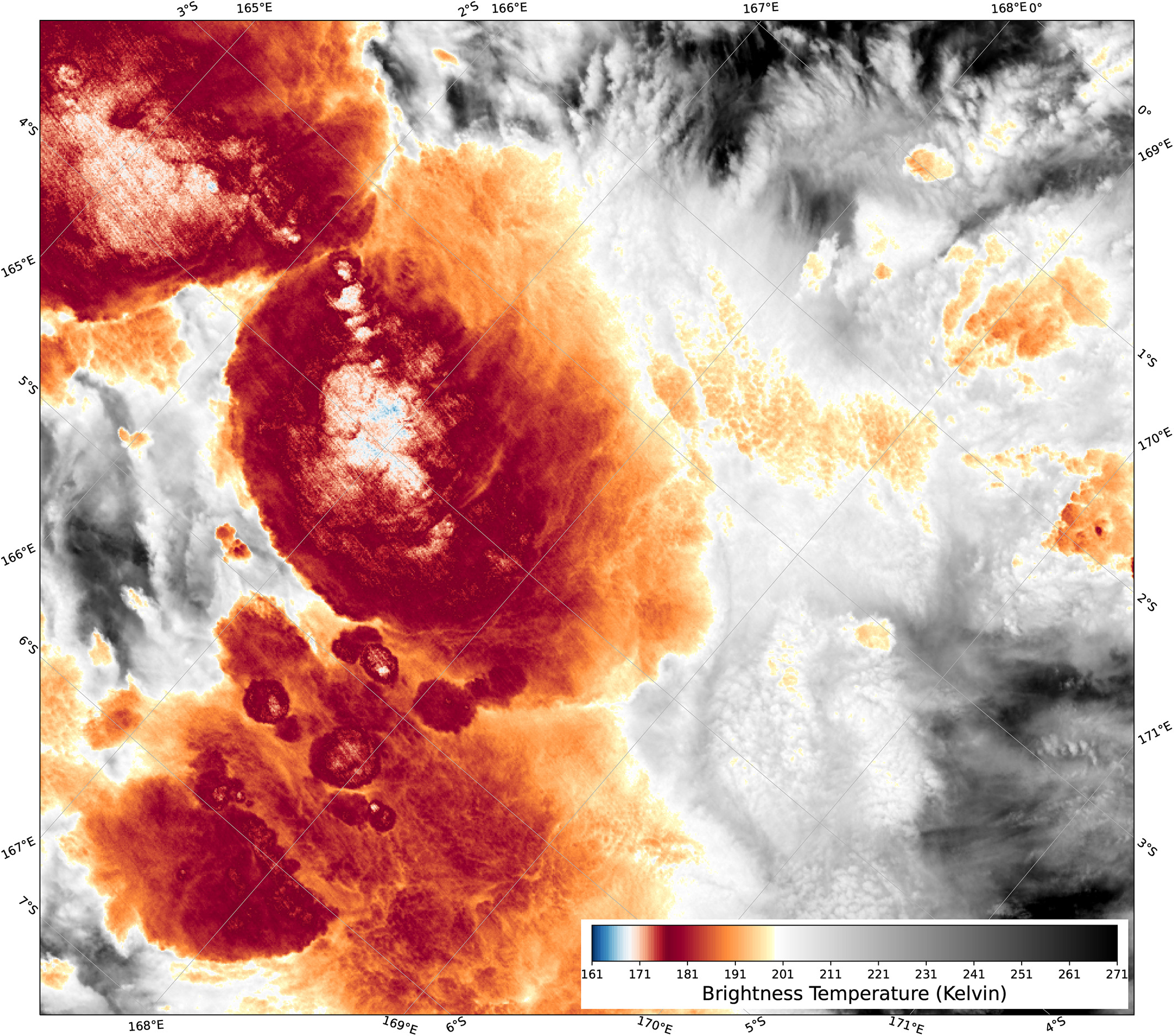
The very top of the storm cloud reached a bone-chilling minus 167.8 degrees Fahrenheit (minus 111 degrees Celsius), colder than any storm cloud measured before.


Thunderstorms and tropical cyclones, a circular low-pressure storm, can reach very high altitudes - up to 11 miles (18 kilometers) from the ground - where the air is much cooler, according to a statement from the UK's National Center for Earth Observation.

But this new temperature is on another level. The top of the storm cloud was about  86 F (30 C) colder than typical storm clouds, according to the statement.

cold cloud with purple patch(National Centre for Earth Observation)

Above: Storms near Nauru on 29 Dec 2018 captured in infrared by an orbiting satellite. The cold parts of the clouds are in purple and the warm Pacific Ocean is in orange.

The beast of a storm loomed about 249 miles (400 km) south of Nauru in the Southwest Pacific on 29 December 2018, and its clouds' temperature was picked up by an infrared sensor aboard the US's NOAA-20 satellite orbiting the planet.

Related: 10 science records broken in 2020

Storms typically spread out into an anvil-like shape when they reach the top of the troposphere, the lowest layer of Earth's atmosphere. But if a storm has a lot of energy, it will shoot into the next layer, the stratosphere.

This phenomenon, known as an 'overshooting top', pushes storm clouds to very high altitudes, where it's bitterly cold.


Overshooting tops are "reasonably common", lead author Simon Proud, a research fellow at the National Centre for Earth Observation and at Oxford University told the BBC. Typically, an overshooting top cools by about 12.6 F (7 C) for every kilometer it rises in the stratosphere, he said. 

But this storm was particularly extreme. "This storm achieved an unprecedented temperature that pushes the limits of what current satellite sensors are capable of measuring," Proud said in the statement.

"We found that these really cold temperatures seem to be becoming more common."

brightness temperatures graph(Proud & Bachmeier, Geophys. Res. Lett., 2021)

Above: VIIRS I5 brightness temperatures (BTs) for 13:38 UTC on December 29, 2018. The cluster of particularly cold BTs is slightly to the left of the image center. VIIRS, Visible Infrared Imaging Radiometer Suite.

In the last three years, scientists have logged the same number of extremely cold temperatures in clouds as they did in the 13 years before that, he added. "This is important, as thunderstorms with colder clouds tend to be more extreme, and more hazardous to people on the ground due to hail, lightning and wind."


This particular storm may have been energized by a combination of very warm water in the region and eastward-moving wind, according to the BBC. However, it's not clear why these colder temperatures in storm clouds are becoming more common. 

"We now need to understand if this increase is due to our changing climate or whether it is due to a 'perfect storm' of weather conditions producing outbreaks of extreme thunderstorms in the last few years," Proud said.

The findings were published March 22 in the journal Geophysical Research Letters.

Related content:

50 interesting facts about planet Earth

2 stunning photos catch monster thunderstorm's approach

Tropical storms and hurricanes of 2016 (Photos)

This article was originally published by Live Science. Read the original article here.


#Nature | https://sciencespies.com/nature/a-pacific-storm-cloud-has-smashed-the-records-for-coldest-temperature-ever/

Mysterious living monuments

Giant trees in tropical forests, witnesses to centuries of civilization, may be trapped in a dangerous feedback loop according to a new report in Nature Plants from researchers at the Smithsonian Tropical Research Institute (STRI) in Panama and the University of Birmingham, U.K. The biggest trees store half of the carbon in mature tropical forests, but they could be at risk of death as a result of climate change -- releasing massive amounts of carbon back into the atmosphere.


Evan Gora, STRI Tupper postdoctoral fellow, studies the role of lightning in tropical forests. Adriane Esquivel-Muelbert, lecturer at the University of Birmingham, studies the effects of climate change in the Amazon. The two teamed up to find out what kills big tropical trees. But as they sleuthed through hundreds of papers, they discovered that nearly nothing is known about the biggest trees and how they die because they are extremely rare in field surveys.


"Big trees are hard to measure," said Esquivel-Muelbert. "They are the pain in a field campaign because we always have to go back with a ladder to climb up to find a place to measure the circumference above the buttresses. It takes a long time. Studies focusing on the reasons trees die don't have enough information for the biggest trees and often end up excluding them from their analysis."


"Because we generally lack the data necessary to tell us what kills trees that are above approximately 50 centimeters in diameter, that leaves out half of the forest biomass in most forests," Gora said.


Only about 1% of trees in mature tropical forests make it to this size. Others wait their turn in the shade below.


The other thing that makes tropical forests so special -- high biodiversity -- also makes it difficult to study big trees: There are so many different species, and many of them are extremely rare.


"Because only 1-2% of big trees in a forest die every year, researchers need to sample hundreds of individuals of a given species to understand why they are dying," Gora said. "That may involve looking for trees across a huge area."


Imagine a study of blood pressure in people who have lived to be 103. One would have to locate and test seniors from cities and towns around the world: a time-consuming, logistically complex and expensive proposition.


A large body of evidence shows that trees are dying faster in tropical forests than ever before. This is affecting the ability of forests to function and in particular, to capture and store carbon dioxide.


"We know the deaths of largest and oldest trees are more consequential than the death of smaller trees," Gora said. "Big trees may be at particular risk because the factors that kill them appear to be increasing more rapidly than the factors that seem to be important for smaller-tree mortality."


In large parts of the tropics, climate change is resulting in more severe storms and more frequent and intense droughts. Because big trees tower above the rest, they may be more likely to be hit by lightning, or damaged by wind. Because they have to pull ground water higher than other trees, they are most likely to be affected by drought.


Hoping to better understand what is happening to big trees, Gora and Esquivel-Muelbert identified three glaring knowledge gaps. First, almost nothing is known about disease, insects and other biological causes of death in big trees. Second, because big trees are often left out of analyses, the relationship between cause of death and size is not clear. And, finally, almost all of the detailed studies of big tropical trees are from a few locations like Manaus in Brazil and Barro Colorado Island in Panama.


To understand how big trees die, there is a trade-off between putting effort into measuring large numbers of trees and measuring them often enough to identify the cause of death. Gora and Esquivel-Muelbert agree that a combination of drone technology and satellite views of the forest will help to find out how these big trees die, but this approach will only work if it is combined with intense, standardized, on-the-ground observations, such as those used by the Smithsonian's international ForestGEO network of study sites.


Esquivel-Muelbert hopes that the impetus for this research will come from a shared appreciation for these mysterious living monuments:


"I think they are fascinating to everyone," she said. "When you see one of those giants in the forest, they are so big. My colleague and Amazonian researcher, Carolina Levis, says that they are the monuments we have in the Amazon where we don't have big pyramids or old buildings....That is the feeling, that they have been through so much. They are fascinating, not just in the scientific sense but also in another way. It moves you somehow."


#Nature | https://sciencespies.com/nature/mysterious-living-monuments/

Inspiration4 announces crew for private SpaceX Crew Dragon mission

WASHINGTON — The private venture that purchased a SpaceX Crew Dragon flight to low Earth orbit has finalized the crew for that mission, scheduled to launch as soon as September.


The Inspiration4 mission, which describes itself as the “world’s first all-civilian mission to space,” revealed the crew that will accompany its sponsor, entrepreneur Jared Isaacman, during a March 30 event at the Kennedy Space Center. Isaacman announced the mission Feb. 1, starting a pair of contests to select two people who would fly with him.


One of those people is Sian Proctor, a scientist and educator who has participated in a number of terrestrial “analog astronaut” missions. She won the seat called “Prosperity” by establishing an online store through Isaacman’s company, Shift4 Payments, and submitting a video judged by an independent panel.


The second is Chris Sembroski, a Lockheed Martin employee in the Seattle area. He won the “Generosity” seat by participating in a sweepstakes that raised money for St. Jude Children’s Research Hospital.


The fourth member of the crew, previously announced, is Hayley Arceneaux, a physician assistant at St. Jude who, as a child, was treated for bone cancer there. At 29, Arceneaux would be the youngest American in space.


“We promised a crew representing some of the best of humanitarian qualities, exemplifying our mission ideals of leadership, hope, prosperity and generosity,” Isaacman said. “I’m pleased to report that we’ve accomplished that goal.”


The four will start training as a group immediately, he said. That training includes time in Crew Dragon simulators, going through all aspects of the mission, as well as centrifuges to simulate the accelerations of launch and reentry and “other forms of stress testing.”


In addition to announcing the crew, Isaacman and SpaceX outlined the details of the mission itself. Launch is scheduled for no earlier than Sept. 15, slightly earlier than the original announcement of the fourth quarter of this year. The spacecraft will remain in orbit for three days, flying in an orbit at the same inclination as the International Space Station — 51.6 degrees — but in an orbit as high as 540 kilometers, more than 100 kilometers above the station.


That particular orbit, Isaacman said, will be the highest people have been above the Earth’s surface since the final shuttle servicing mission to the Hubble Space Telescope in 2009. “It should send a message,” he said, one of going beyond the ISS. “We’re ready to go back to the moon, and we’re ready to go beyond the moon to Mars. Extending out a little bit farther than where we’ve been for some time right now is a good step in the right direction.”


The three-day mission duration, he added, “is a good balance between the capabilities of the Dragon spacecraft and how much time you want to spend in a relatively small space for a couple days together.”


Benji Reed, senior director of human spaceflight programs at SpaceX, said the company moved up the mission slightly to September to accommodate the Crew-3 launch for NASA later in the fall. “This crew, with training, we believe will be ready by September, as well as the Dragon,” he said. “It works out very well with our manifest.”


The Inspiration4 mission will use the same Dragon spacecraft, called Resilience, currently docked at the ISS for the Crew-1 mission. That spacecraft is currently scheduled to return to Earth April 28, assuming the Crew-2 mission launches to the station on schedule April 22. “We feel very good about the timeframe we’re working in” to refurbish the spacecraft for Inspiration4.


Crew Dragon cupola
An illustration of the Crew Dragon spacecraft outfitted with a cupola in place of the docking adapter used for space station missions. Credit: SpaceX

Besides refurbishing the spacecraft, SpaceX will install an additional window on the spacecraft, a viewing port modeled on the space station’s cupola that will replace the docking adapter under the spacecraft’s nose cone. Since the Inspiration4 mission will not dock with the station, that adapter is not needed.


“It’s awesome,” Reed said of the cupola. Qualification and testing of the cupola is in progress, and Reed said SpaceX will ensure that its installation doesn’t preclude using the spacecraft for later missions, such as those to the station that will require the reinstallation of the docking adapter.


Inspiration4 will be the first Crew Dragon mission for a customer other than NASA, but it is not the only one on its manifest. Axiom Space will fly four people to the ISS on its Ax-1 mission in early 2022. Space Adventures previously announced a Crew Dragon mission that would fly well above the station, but that space tourism company has not provided any updates on its schedule for that mission.


“We’re trying to deliver an awful lot of messages with this mission,” Isaacman said. “When this mission is complete, people are going to look at it and say this was the first time that everyday people could go to space.”


However, Inspiration4 may have overestimated the interest in the mission. Proctor was one of only about 200 people who participated in the Prosperity competition, which required no expense beyond the time setting up an online store and producing a video. Sembroski was selected from nearly 72,000 entries, which could be purchased at the rate of 10 entries per dollar, up to 10,000 entries per person.


That limited interest has hurt Inspiration4’s efforts to raise money for St. Jude. The mission has raised a little less than $13 million for the hospital as of March 30, most of which was raised when the sweepstakes was open in February. That’s well short of the goal of $100 million set when Inspiration4 was announced Feb. 1.


“We’ve helped drive a significant amount of donations to St. Jude Children’s Research Hospital,” Isaacman said. “This fundraising effort is really far from over. We’ll be continuing throughout the year.” He didn’t elaborate on those future fundraising plans.


#Space | https://sciencespies.com/space/inspiration4-announces-crew-for-private-spacex-crew-dragon-mission/

We finally have synthetic mucus. Here's why that matters

The day has finally come. Scientists have finally created synthetic mucus molecules that exhibit the structure and function of the real deal.

Far from being a slime crime, though, it's a discovery that could help scientists devise new treatments for infectious diseases, according to the research team behind the breakthrough.


Slippery, slimy, and oozy, mucus does seem pretty gross. However, as disagreeable as we may find it, the stuff is biologically useful: It acts as a barrier protecting and moisturizing delicate tissues, trapping microbes (for which it's also loaded with antimicrobial enzymes), and contaminants, and helping the body expel them.

Our bodies produce between 1.5 and 2 liters (1.5 to 2 quarts) of mucus every day in the respiratory tract alone; it coats our airways, lungs, and gastrointestinal tracts - we're practically walking bags of miracle goo.

If we could replicate its properties, that could provide us an important tool in the fight against diseases, and this new research is an important step. Scientists led by chemist Austin Kruger of MIT have synthesized mucins, the protein building blocks of mucus.

Mucins consist of a long protein spine bristling with strands of carbohydrate polymers called glycans (much like a fuzzy pipe cleaner); it's unclear how the polymers contribute to the various properties of mucus. Previous research found that they hinder bacteria's ability to communicate with each other, attach to surfaces, and secrete toxins.


The team's synthetic mucins, built around a polymer spine, could help figure it out - not only are they structured just like the real thing, they even replicate some of its functions.

"We would really like to understand what features of mucins are important for their activities, and mimic those features so that you could block virulence pathways in microbes," said chemist Laura Kiessling of MIT.

The difficulty is that mucins are complicated. The protein spine consists of thousands of different amino acids, the scientists said, and there are many different types of glycans that can make up the bristles.

The team started with carbon ring molecules, and used a process that opened them out into a straight line. The resulting molecules, each containing a carbon-carbon double bond, were then joined together to form the polymer spine of the synthetic mucin.

Each carbon atom in the bond is usually bonded to another chemical group, and the polymer can take different forms depending on where they are attached. In the cis form, the two groups - the carbon and the other one, whatever it may be - are on the same side; in the trans form, they are on opposite sides.


The team created both forms in their attempt to synthesize mucins and put them to the test.

The trans polymers turned into weird little blobs that didn't look a lot like mucins. Nor were they particularly effective at capturing the toxins secreted by the Vibrio cholerae bacterium.

The cis polymers, however, remained elongated; and, when exposed to V. cholerae, not only did they capture the toxins effectively, they performed even better than real mucins.

There's still more to be done - the team's work didn't include the glycan bristles - but already it shows great promise. The team neatly demonstrated that the elongated shape of the spine plays an important role in the way mucins functions.

In addition, the team found that the cis polymers were water soluble - more so than natural mucin - which means they have potential for inclusion in topical creams and gels, and maybe even eyedrops.

"Our findings," they wrote in their paper, "outline a critical design principle for synthetic mucin mimics that will guide future studies of mucin's role in microbial symbiosis and pathogenesis and serve as a blueprint for generating mucin mimics that act as lubricants or control microbiome composition and infectious disease."

The research has been published in ACS Central Science.


#Humans | https://sciencespies.com/humans/we-finally-have-synthetic-mucus-heres-why-that-matters/

Scientists discover a hidden law behind the pointy bits on all living things

Scientists have identified a new rule of growth that shapes the form and development of pointy or sharp biological structures in animals and plants, such as teeth, horns, claws, beaks, and thorns.


Describing the newly found pattern as a previously unknown law of nature, the researchers call their discovery the "power cascade" – a mathematical power law found throughout nature, determining the growth and evolution of a family of shapes called power cones.

"The diversity of animals, and even plants, that follow this rule is staggering," says evolutionary biologist Alistair Evans from Monash University in Australia.

"We were quite shocked that we found it almost everywhere we looked across the kingdoms of life – in living animals, and those extinct for millions of years."

The focus of much of Evans' work is the morphological evolution and functioning of their body parts. Sometimes that focus is trained on the remarkable features of individual creatures; at other times, a similar pattern can be discerned among many organisms.

Hundreds of years ago, another scientist had the same preoccupations. Sir Christopher Wren, the famed English architect and polymath, proposed the shapes of snail shells were determined by the mathematics of logarithmic spirals, where one side of a structure grows faster than another.

Centuries later, Evans had a similar realization, but struck upon a new rule of growth beyond Wren's thinking – based upon a new shape, the power cone, which is generated when the radial power growth rate is unequal to the length power growth rate.

"For many years I have searched for a pattern in how teeth grow," Evans explains in The Conversation. "By looking at hundreds of teeth and measuring how they get wider as they get longer, my team and I identified a simple mathematical formula that underpins tooth shape."

This formula, the power cascade, isn't only observed in the shape of natural teeth, horns, fangs, and prickles; the power cascade model can also simulate the growth of these structures, the researchers say.

The new discovery means we may be able to gauge the age of animals by simply knowing the shape of their teeth, as reconstructions of the shape could indicate the necessary growing time.

Another application could be anticipating future evolutionary processes, the team thinks.


"These shapes may be considered the default family of shapes for pointed structures, meaning they are more likely to independently evolve multiple times and will be a likely source of homoplasy in evolution," the researchers write in their study.

"Due to the huge breadth of structures and taxa in which this pattern is found, it appears that the power cascade is a fundamental pattern of growth in myriad organisms."

The findings are reported in BMC Biology.


#Nature | https://sciencespies.com/nature/scientists-discover-a-hidden-law-behind-the-pointy-bits-on-all-living-things/