Featured Post

Tracking air pollution disparities -- daily -- from space

Studies have shown that pollution, whether from factories or traffic-snarled roads, disproportionately affects communities where economicall...

Monday, June 1, 2020

The Storied History Behind Saturday's Planned SpaceX Launch


Redefining How NASA Gets into Space


Space X's Crew Dragon spacecraft, which is part of NASA's Commercial Crew Program.


The end of the Space Shuttle program in 2011 signaled a time of change for NASA. Not only because its longest operational vehicle was going out of service, but because going to our permanent home in space, the International Space Station (ISS), would never happen the same way again. For almost a decade, the U.S. space agency relied on the Russian Soyuz spacecraft to take our astronauts to the station, paying millions of dollars to ensure that the onboard research and maintenance would continue without interruption. As NASA planned the construction and use of the Orion spacecraft and Space Launch System (SLS) rocket as a means of going back to the Moon and on to Mars, they also planned for a new way to get to the ISS. That meant a very new way of doing business with a group of successful new space companies, letting the bulk of NASA’s human spaceflight efforts focus on exploration while others kept eyes on space station crew and operations.


Commercial crew astronauts Bob Behnken (left) and Doug Hurley (right) stand in front of a SpaceX Dragon mock-up at the Johnson Space Center. (NASA)

Fulfilling NASA’s exploration goals worked generally the same way for the last 60 years. An administration set a goal, like Kennedy’s goal of landing people on the Moon and returning them to Earth by the end of the 1960s. Then NASA solicited bids for a contract to fulfill that goal by constructing a spacecraft, rockets, and other equipment. The agency then received that equipment, like it did the Space Shuttle from Rockwell International (Boeing), and carried out missions using its own staff with support from contractors as needed. This held true for its Mercury, Gemini, Apollo, Skylab, Space Shuttle, and International Space Station programs. Steps towards changing program operations and the way astronauts work began early in the Space Shuttle program with the inclusion of Payload Specialists. These non-career astronauts represented companies or organizations with important work included on the mission, though some passengers were considered “goodwill” crew, symbols of appreciation to other governments or our own congressional members. This guest astronaut program continued until 2003, when Israeli astronaut Ilan Ramon was lost along with the crew of Space Shuttle Columbia.


Expedition 62 member Jessica Meir retrieves frozen samples from MELFI in the US National Lab (Destiny) module. (NASA)

As the primary work on the ISS turned from construction to research and maintenance, so did the way in which the research was organized. Beginning in 2012, under Congressional mandate for a non-profit organization to manage the science and technology research time of astronauts, the US National Laboratory program altered the path of interactions between NASA and companies, universities, and other organizations. Similarly, changes came starting in 2008 when NASA began exploring the concept of commercial cargo resupply of the ISS, which was realized with Northrup Grumman and SpaceX beginning in 2013. With this increase in commercial involvement came the question: Could NASA contract out even the transportation of astronauts to the station to commercial entities as the agency turned its attention to exploration beyond Earth orbit? In September 2014, NASA did just that, starting with the Commercial Crew Development Program. They awarded contracts to SpaceX and Boeing to develop, build, and operate programs that would carry NASA astronauts to the ISS. With many test flights now completed, the Demo-2 flight of the SpaceX Crew Dragon spacecraft on May 30, 2020, will fulfill the Commercial Crew Program’s first major milestone: taking two astronauts to the ISS.


The major difference between how SpaceX and Boeing work and how the Space Shuttle or Soyuz spacecraft took crews to the ISS is how NASA is involved in the process. Instead of being a customer who received a product to then operate themselves, NASA is more on the sidelines in the case of the Crew Dragon and Starliner vehicles. With six contracted missions each, SpaceX and Boeing will also carry out the mission service side for the first. Converting spaceflight from “goods” contracts to “goods and services” means that NASA personnel are in the role of certifying that all elements of vehicle construction are complete to certain standards, that each company has met safety requirements, and that they have shown evidence of its ability to launch and send a vehicle to the ISS. SpaceX completed these tasks in order to schedule the first crewed launch, Demo-2. Boeing’s orbital test in December 2019 revealed software and other problems that require a retest later in 2020 with potential crew flights in 2021.


Success of the Demo-2 flight means NASA can once again provide crewmembers for the ISS directly from American soil, a necessity steeped in the Cold War competition with the Soviet Union. These crewmembers will continue the science research and maintenance of the station for at least the duration of the contracts with these commercial providers. Though this flight is only a test and will carry a complement of two passengers who are not expected to become a formal part of the current Expedition 63 crew aboard the ISS, it signals the beginning of regular rotations of U.S. and other partner nations crewmembers launching from Florida starting in the summer of this year. This does not end the need for crew to launch from the Russian launch pad in Baikonur, Kazakhstan, but it will reshape the relationship between the U.S. space agency and ISS operations. While still many years in the future, this could perhaps signal a path forward for an even larger presence in space for humans aboard new space stations using commercial operators.


Jennifer Levasseur is a curator in the Museum’s Space History Department and is responsible for the Space Shuttle, International Space Station, camera, and chronograph collections.


#Nature | https://sciencespies.com/nature/the-storied-history-behind-saturdays-planned-spacex-launch/

Bald Eagle Nest With Eggs Spotted on Cape Cod for the First Time in 115 Years


For the first time in 115 years, wildlife officials have spotted a bald eagle nest with eggs on Cape Cod. This find marks an exciting development as the bald eagle population continues to soar to new heights in the Massachusetts area, officials say in a statement.


As Caroline Enos reports for the Boston Globe, officials from the Massachusetts Division of Fisheries and Wildlife spotted the nest in the town of Barnstable. The new nest is the first sighting since 1905, when a nest with eggs was spotted in nearby Sandwich.


MassWildlife announced in the statement that it had documented more than 70 active bald eagle nests in Massachusetts this nesting season—an uptick from years past, Sophie Lewis reports for CBS News.


“People are just awestruck when they see a bald eagle,” Marion Larson, a spokeswoman for MassWildlife, tells the Boston Globe. “There’s a thrill to seeing them here because they weren’t in Massachusetts for quite a few years.”


Pollution from industrial pesticides such as DDT, habitat destruction and illegal shooting drove the national bird almost to extinction in the 1960s. The species was one of the first to be protected by the protected by the Endangered Species Act, according to the American Bird Conservancy. Due to conservation efforts, its numbers have rebounded in recent years. Bald eagles were officially de-listed as “endangered” in 2007, as Smithsonian magazine reported at the time.


Bald eagles were absent from Massachusetts from 1905 to 1982, according to the Boston Globe. Successful reintroduction programs have grown the local bald eagle population to the point that they were recently downgraded from “threatened” to “special concern” on the Massachusetts Endangered Species Act list, per the statement.


“We’re always checking the old nests to see if there is actually nesting activity going on,” Larson tells the Boston Globe. “We found nine new nests so far this year, which is really exciting.”


Bald eagles are the largest bird of prey in the state of Massachusetts, Aristos Georgiou reports for Newsweek. The birds are known for building enormous nests—the largest bald eagle nest ever recorded was in St. Petersburg, Florida, and measured a staggering 9.5 feet across and 20 feet tall, per the Cornell Lab of Ornithology.


As their population bounces back, bald eagle nests have been popping up across the United States—sometimes in surprising places. Just last month, a pair of bald eagle parents was spotted nesting in a saguaro cactus in Arizona. As Katherine Wu reported for Smithsonian magazine, the Arizona Game and Fish Department captured the first-ever photographic evidence of the symbolic birds nesting in the tree-like cacti. Another pair of bald eagles recently returned to nest for the third year in a north Orange County neighborhood in California, Colleen Shalby reports for the Los Angeles Times.


Like this article?
SIGN UP for our newsletter


#News | https://sciencespies.com/news/bald-eagle-nest-with-eggs-spotted-on-cape-cod-for-the-first-time-in-115-years/

Demo-2 launch wins political praise, but future funding uncertain

WASHINGTON — The successful return of human orbital spaceflight to the United States generated bipartisan praise, but it’s unclear if that support will translate into funding required to enable other NASA human spaceflight ambitions.


While President Donald Trump’s presence at the May 30 launch of SpaceX’s Demo-2 commercial crew mission received attention, he was accompanied by Vice President Mike Pence, several members of the president’s cabinet, and nearly 20 members of Congress, according to the White House.


Among the members of that congressional delegation was Rep. Brian Babin (R-Texas), who is ranking member of the House Science Committee’s space subcommittee. “Seeing this first crewed flight take place is an incredible source of pride for me. For too long, we have been dependent on Russia to put Americans into space. That dependence ends today,” he said in a statement after the launch.


That delegation was dominated by Republicans, who were thanked individually by Trump in his remarks at the Kennedy Space Center after the launch. There were a few Democrats who also attended but were not mentioned by Trump in his speech, including Rep. Kendra Horn (D-Okla.), who chairs the space subcommittee.


“As the first launch of American astronauts on an American rocket from American soil in almost a decade, the Demo-2 mission marks a significant milestone for our nation’s human space flight program and commercial crew,” she said in a statement after launch. “I look forward to continued progress toward the certification of Crew Dragon for safe and routine transportation of NASA astronauts to the ISS.”


Others not at the launch weighed in, including former Vice President Joe Biden, the presumptive Democratic nominee for president. While Biden did not play a major public role in space policy while serving as President Barack Obama’s vice president, he did win praise by others, including former Sen. Bill Nelson (D-Fla.) and former NASA Administrator Charles Bolden, for his work winning initial support for commercial crew.


“This mission represents the culmination of work begun years ago, and which President Obama and I fought hard to ensure would become a reality,” Biden said in a statement after the launch. “We planted the seeds of today’s success during the 2009 Recovery Act, which according to NASA, has saved taxpayers up to $30 billion and invigorated an aerospace industry in Florida that accounts for more than 130,000 jobs in the state.” NASA used a portion of stimulus funding allocated by that act, passed in response to the 2008 financial crisis, for initial awards for technologies supporting commercial crew development.


Throughout the events before and after the Demo-2 launch, NASA Administrator Jim Bridenstine has walked a fine line, praising the Trump administration for its support for the agency while also emphasizing that NASA need bipartisan support to achieve its goals, as well as going out of his way to praise his predecessor, Bolden, for his work laying the groundwork for commercial crew.


“President Trump said, ‘We’re going to make space a priority,’” Bridenstine said in remarks after the launch to introduce Pence who, in turn, introduced Trump. “As a nation, America is again leading in space.”


At a press conference at the Johnson Space Center May 31, after the Crew Dragon spacecraft docked with the ISS, Bridenstine noted that the agency was seeking nearly $3 billion more in fiscal year 2021 than it received in 2020, primarily for programs linked to the administration’s goal of landing humans on the moon by 2024.


“Our budgets are going up. They’re going up rapidly. My job is to make sure that we have the bipartisan, apolitical support to achieve these objectives, and so far we have been able to do that,” he said.


The funding outlook for fiscal year 2021, though, remains uncertain. The coronavirus pandemic has stalled the standard appropriations process given the focus on bills to provide economic relief as well as disruptions to the overall legislative process. Neither House nor Senate appropriators have taken up spending bills for 2021, or scheduled hearings to discuss NASA’s budget request.


In a May 29 statement, House Majority Leader Steny Hoyer (D-Md.) said the House would spend June primarily doing committee work. The House Appropriations Committee, he said, “will continue to hold necessary COVID-19 oversight hearings before beginning subcommittee and full-committee markups at the end of June and beginning of July.”


#Space | https://sciencespies.com/space/demo-2-launch-wins-political-praise-but-future-funding-uncertain/

'Lady in the well' sheds light on ancient human population movements


West Asia, which includes Anatolia (present-day Turkey), the Northern Levant and the Southern Caucasus is seen in a partial map obtained by Reuters June 1, 2020. An international team of researchers showed populations from Anatolia and the Caucasus started genetically mixing around 6,500 BC and that small migration events from Mesopotamia 4,000 years ago brought further genetic mixture to the region. The orange marker shows the route from Central Asia. DNA from a lone ancient woman revealed proof of long distance migration during the late Bronze age about 4,000 years ago from Central Asia to the Mediterranean Coast. Courtesy of Max Planck-Harvard Research center for the Archaeoscience of the Ancient Mediterranean/Handout via REUTERS


WASHINGTON (Reuters) - The bones of a woman of Central Asian descent found at the bottom of a deep well after a violent death in an ancient city in Turkey are helping scientists understand population movements during a crucial juncture in human history.


Researchers have dubbed her the “lady in the well” and her bones were among 110 skeletal remains of people who lived in a region of blossoming civilization running from Turkey through Iran between 7,500 and 3,000 years ago.


The study provided the most comprehensive look to date of genetics revealing the movement and interactions of human populations in this area after the advent of agriculture and into the rise of city-states, two landmarks in human history.


The remains of the “lady in the well,” found in the ruins of the ancient city of Alalakh in southern Turkey, illustrated how people and ideas circulated through the region.


Her DNA showed she hailed from somewhere in Central Asia - perhaps 2,000 miles (3,200 km) or more away. She died at about 40 to 45 years old, the researchers said, probably between 1625 BC and 1511 BC. Her body bore signs of multiple injuries.


“How and why a woman from Central Asia - or both of her parents - came to Alalakh is unclear,” said Ludwig Maximilian University Munich archaeologist Philipp Stockhammer, co-director of the Max Planck-Harvard Research Center for the Archaeoscience of the Ancient Mediterranean and co-author of the study published in the journal Cell.


“Trader? Slaves? Marriage? What we can say is that genetically this woman is absolutely foreign, so that she is not the result of an intercultural marriage,” Stockhammer added. “Therefore, a single woman or a small family came this long distance. The woman is killed. Why? Rape? Hate against foreigners? Robbery? And then her body was disposed in the well.”


Reporting by Will Dunham; Editing by Sandra Maler


#News | https://sciencespies.com/news/lady-in-the-well-sheds-light-on-ancient-human-population-movements/

Airborne science discovers complex geomorphic controls on Bornean forests

Tropical forests contain some of the most biodiverse and dynamic ecosystems in the world. Environmental conditions such as precipitation, temperature, and soils shape the biota of the landscape. This influence is especially noticeable when comparing the towering trees found in low elevation forests to the hardier, shorter ones found at the top of tropical mountains. Together, these factors create an ever-changing and heterogeneous ecosystem, with each niche harboring different species of uniquely adapted trees.


Scientists have sought to understand the links between geology (the rock types that soils originate from), biogeochemistry (feedbacks between environmental conditions, nutrient cycling, and plants), biodiversity (the variety of life in an ecosystem), and biogeography (how trees are distributed across a landscape) to paint a more complete picture of how life coevolved with our planet. Now, in a new study published today in Ecology Letters, researchers from Stanford University and Arizona State University (ASU) used maps of leaf chemistry, high-resolution topography data, and computer models to reveal new insights into the processes governing these complex interactions.

"We wanted to explore how long-term processes that shape the Earth's surface also act to control the organization of ecosystems across landscapes. Understanding these organizing processes requires the integration of concepts from across disciplines. The purpose of this study was to combine high-resolution airborne remote sensing datasets that contain information on both ecosystems and the morphology of landscapes, to understand how the two are interrelated on this iconic tropical mountain," said Dana Chadwick, lead author of the study.

The study analyzed data from Mt. Kinabalu in Malaysian Borneo -- a 4,095-meter high mountain harboring a wide diversity of trees across topographically varied terrain. As tropical rains drench the mountain's surface, elevation differences between its shallow slopes and steep peaks create imbalances in soil erosion rates -- generally, the steeper the hill, the faster the rain rushes down its surface, taking soil with it. Soils carry nutrients needed by plants to grow, and erosion contributes to the distribution of these plant-required nutrients. Some areas become nutrient-rich and others become nutrient-poor, influencing the kinds of trees that can grow there. Adding to this dynamic process, some soil types are more or less prone to erosion than others depending upon their geological origins, and can also contain more nutrients plants need than others.

To overcome limitations of previous studies conducted in tropical mountains at a local scale, the researchers used maps created by ASU's Global Airborne Observatory to collect large-scale data across 32 watersheds and at elevations ranging from 700 to 2800 meters. The maps included the concentrations of nutrients in the tropical forest canopy as well as the structure and architecture of the trees. This provided the researchers an unprecedented look at the forests of Mt. Kinabalu and its remote complex terrain.

"Although we originally deployed our airborne observatory to Borneo for conservation impact, such as the new protected area now under development, the opportunity to discover all-new patterns of biodiversity also presented itself in ultra-remote areas like Mt. Kinabalu," said Greg Asner, author of the study and director of ASU's Center for Global Discovery and Conservation Science.

The chemical maps revealed that leaves from trees contained different amounts of nutrients depending upon both the elevation and geology of its environment. Along hillslopes, from ridge to valley, trees contain more nutrients while their ability to capture and utilize sunlight also increases. The researchers found that this trend was significantly impacted by changing erosion rates, highlighting the important role erosion plays in distributing fresh nutrients to the soil.

"The discovery of such strong and beautifully complex geologic control on forest composition gives us new insight into the fundamental make-up of Bornean forests, in ways that inspire even more exploration," Dr. Asner added.


Story Source:

Materials provided by Arizona State University. Note: Content may be edited for style and length.


#Nature | https://sciencespies.com/nature/airborne-science-discovers-complex-geomorphic-controls-on-bornean-forests/

Venture capital is pulling back but Voyager is ‘in for the long run’

Space startups have been hit hard during the coronavirus pandemic as venture capital has retreated. Matthew Kuta, president and chief operating officer of Voyager Space Holdings, says the crisis has laid bare a fundamental mismatch between venture investors focused on making quick profits and what space companies need to be successful, which is a long-term commitment.


Denver-based Voyager Space Holdings, backed by angel investor Dylan Taylor, was founded in October. Kuta told SpaceNews that the company is poised to increase investments in the space sector. So far it has acquired the space robotics company Altius Space Machines, and there are multiple deals in the works.


Kuta is a U.S. Air Force Academy graduate and former F-15 fighter pilot who spent time on Wall Street in private equity investment at Goldman Sachs. Having been in that part of the investment world, Kuta believes that the traditional private capital models are ill-suited for space businesses that have long research-and-development time horizons and high capital expenditures. Voyager provides what he calls “permanent capital.”


What is happening with venture investment in space?


VC money has dried up. The recession is driving investors from space to other sectors where they can make profits faster. Venture investment is incentivized by what is known as the “internal rate of return” where the incentive is to put money into a company and sell it after a few years at a profit. This has worked well for venture space in recent years but now VCs are looking at industries that have lower capital expenditures like software. It’s tricky for space. There are large capital expenditures, there’s R&D delays, there are launch delays. That’s why space startups are struggling. Investors don’t see them as places where they earn that internal rate of return within a short time window.


Any predictions on what’s next for the startup community?


It’s going to be a very difficult road for many startups. If they’re lucky, their venture investors will give them some more capital to prop them up and take more ownership of the company. Some will ride out the storm by making drastic cuts so investors can salvage whatever assets they can or sell the company. Because there’s so much uncertainty, it will be tough to raise money. VCs were very late to enter the NewSpace sector. They’re going to be the first ones to retreat because they never really completely understood it. It was just one component of their portfolio.


Can the Pentagon influence VC behavior?


I hear defense officials talk about this all the time. The narrative out there is that U.S. investors are walking away from space and DoD is concerned that foreign buyers will buy distressed companies. There are some things DoD can do, like extending contracts or funding Small Business Innovation Research projects. But the most important issue for DoD to understand is the incentive structure of venture capital, and I don’t think they do. VC investors will focus on propping up their portfolio companies to salvage existing investments, or they’re going to retreat to known business models that are light on capital expenditures. What I would tell DoD is that venture capital is a fundamental mismatch for the space sector.


DoD worries about “adversarial capital.” Is the fear justified?


Absolutely. I know for a fact there are U.S.-owned space companies that were being heavily courted by the Pentagon before coronavirus hit. But since VC money started drying up, these companies are burning through cash. They face a choice. They can keep listening to DoD policymakers telling them to not take foreign capital. But ultimately, they’ve got to put food on the table. They don’t want to go out of business. As a result, they’re starting to entertain conversations from foreign investors ready to invest. They’ll worry about CFIUS reviews later. Maybe they get boxed out of potential DoD programs in the future if the Committee on Foreign Investment in the United States determines the foreign investment impacts national security. That’s a problem they’ll figure out in two or three years, but they have to pay their mortgage now.


Is China stepping up investments in U.S. companies?


China is not the only one, but they’re obviously there. China is looking to make investments in U.S. companies, and they’re willing to overpay because they’re essentially subsidized by the Chinese government. And then they take control of intellectual property that they bring back to China, or they just end up closing down the U.S. company so that no one else can have it. That’s going to accelerate because of coronavirus. They have subsidized state-sponsored venture capital investments. U.S. investors have a fiduciary responsibility to their shareholders to make the most efficient investment. The Chinese shareholder essentially is the government. So when they think in terms of national security, even if it’s a bad investment, they might just want the capability to be removed from the U.S. ecosystem.


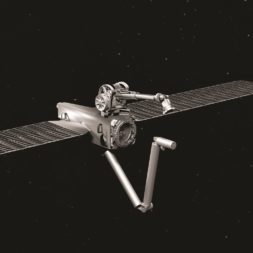
Voyager Space Holdings-owned Altius Space is developing a family of Bulldog microsatellite-scale servicing tugs. Credit: Altius Space

Is the current climate creating opportunities for Voyager?


We’re still investing while venture has slowed or stopped. We’re not a venture capital fund. We’re not a private equity fund. We are a holding company. We provide long-term, permanent investments, and we do that before, during and after a recession. We focus on long-term value creation versus the short-term internal rate of return. The mechanics of what we do look and smell very much like venture capital and private equity: we find companies, we invest, we own some percentage of a company. But there’s a difference. Voyager is purpose built to service the NewSpace sector. We have shareholders, we have capital. When we make an investment, it’s permanent. We never have to sell the company; we can just focus on growing it for two, five or 20 years.


Altius is the only company in your portfolio. Are you looking at more acquisitions?


Yes. We actually have a few companies under exclusivity right now. I can’t disclose the names because we’re under NDA. But there is a company we plan to publicly announce in the coming weeks our intent to acquire. Generally, we don’t do early stage investments. We’re interested in companies that have a more established stream of revenue, maybe $5 million to $15 million. They produce cash flow. And right now the companies that we really like, and the ones that are kind of in our pipeline, have a substantial amount of revenue coming from the government. That provides a lot of risk mitigation. Of course, there’s risks that government budget priorities can change. The Trump administration’s support of space provides downside protection, particularly to purely commercial streams of revenue that might have dried up because of COVID-19.


Do you expect the small-launch bubble will burst soon?


Venture capital is not a good fit for the launch business because of the high rate of failure, very thin operating margins and massive capital expenditures. The last I heard, there are over 140 small-launch companies out there. As a recent RAND study noted, the U.S. can probably support two large launch companies at a time. Who knows how many smaller ones? Maybe a couple, but not 140. There‘s a place for small reusable launch, but no one’s smart enough to pick the two or three out of the 140. As a result, I think there’s going to be a large shakeout.


How should the government think about space investment?


It’s more than just developing a new hypersonic missile or launching a new satellite. DoD, and the government more broadly, should focus on large infrastructure-type investments like what the United States did with the Apollo program in the 1960s. That is how we get significant long-term capital into NewSpace companies. Infrastructure investments can be really transformative for our country and get people energized about space. GPS is an example. It’s the backbone of the infrastructure for a lot of commercial space. And when the government invests in these assets, we have to protect those assets, which means more DoD and national security investment. The space sector, like the internet in the 1990s, is transformative. The national security component provides downside protection, so there’s a lot of opportunity.


When do you see the space sector recovering from this crisis?


We view this in phases. For Voyager, there’s now less competition because venture capital money has moved elsewhere. So there are a lot of fantastic space companies out there — with visibility for a year or two into streams of cash flow — that are perfect fits for us. We see a one- to two-year slowdown. Post pandemic, we see a great opportunity of long tail winds with this industry. Geopolitical tension with China is an issue. The creation of the Space Force was part of the outcome. That is significant for space and national security, making the space budget a recession resistant stream of revenue that we see as kind of acyclical, if you will. We see a $400 billion space economy grow into a multi-trillion dollar space economy over the next 20 or 30 years.


This article originally appeared in the May 11, 2020 issue of SpaceNews magazine.


#Space | https://sciencespies.com/space/venture-capital-is-pulling-back-but-voyager-is-in-for-the-long-run/

Russia applauds SpaceX launch but calls Trump's reaction 'hysteria'


MOSCOW (Reuters) - Russia’s space agency criticised U.S. President Donald Trump’s “hysteria” about the first spaceflight of NASA astronauts from U.S. soil in nine years, but also said on Sunday it was pleased there was now another way to travel into space.


SpaceX, the private rocket company of billionaire entrepreneur Elon Musk, launched two Americans into orbit on Saturday en route to the International Space Station (ISS), a landmark mission that ended Russia’s monopoly on flights there.


Trump, who observed the launch, said the United States had regained its place as the world’s leader in space, that U.S. astronauts would soon land on Mars, and that Washington would soon have “the greatest weapons ever imagined in history.”


NASA had had to rely on Roscosmos, Russia’s space agency, to get to the ISS since its final space shuttle flight in 2011, and Trump hailed what he said was the end of being at the mercy of foreign nations.


The U.S. success will potentially deprive Roscosmos, which has suffered corruption scandals and a number of malfunctions, of the lucrative fees it charged to take U.S. astronauts to the ISS.


“The hysteria raised after the successful launch of the Crew Dragon spacecraft is hard to understand,” Vladimir Ustimenko, spokesman for Roscosmos, wrote on Twitter after citing Trump’s statement.


“What has happened should have happened long ago. Now it’s not only the Russians flying to the ISS, but also the Americans. Well that’s wonderful!”


SpaceX’s capsule docked with the ISS on Sunday.


Roscosmos head Dmitry Rogozin congratulated NASA chief Jim Bridenstine for the success.


“Bravo! I know how anxious you were for this major event to become a success,” Rogozin wrote on Twitter.


FILE PHOTO: A SpaceX Falcon 9 rocket and Crew Dragon spacecraft carrying NASA astronauts Douglas Hurley and Robert Behnken lifts off during NASA's SpaceX Demo-2 mission to the International Space Station from NASA's Kennedy Space Center in Cape Canaveral, Florida, U.S., May 30, 2020. REUTERS/Joe Skipper/File Photo

Rogozin said he had appreciated a barbed joke by Musk referencing his own 2014 barb that the United States should try using a trampoline to get to the ISS. Musk told a post-launch news conference “the trampoline is working”.


Ustimenko said Russia planned to test two new rockets this year and to resume its lunar programme next year.


“It will be interesting,” said Ustimenko.


Editing by Susan Fenton and Frances Kerry


#News | https://sciencespies.com/news/russia-applauds-spacex-launch-but-calls-trumps-reaction-hysteria/