Featured Post

Tracking air pollution disparities -- daily -- from space

Studies have shown that pollution, whether from factories or traffic-snarled roads, disproportionately affects communities where economicall...

Saturday, November 2, 2019

Eutelsat planning layoffs, hiring freeze to rein in spending

WASHINGTON — With revenue down and its just-launched satellite in trouble, Eutelsat Communications is preparing to layoff around 100 of its 1,000 employees, freeze wages and suspend hiring as it looks to return to growth. 


Sandrine Téran, Eutelsat’s chief financial and IT officer, said Oct. 30 that the company hopes the initiative, called LEAP-2, will save 20 million to 25 million euros ($22.3 million to $27.9 million) by the end of its fiscal year 2022.


Paris-based Eutelsat, having already reduced its annual capital expenditure budget from 500 million euros to 400 million euros since 2016, has turned its gaze to other means of saving cash while investing in broadband connectivity to jump-start growth. 


“The plan will involve multiple measures, including a reduction of circa 100 net count outside of France, a global hiring freeze in the legacy businesses, and austerity measures within France, including a compensation freeze over three years,” Téran said during a company earnings call. 


Eutelsat cut 32 million euros from its operating expenses over the past three years through its LEAP-1 program, surpassing an original target of 30 million euros. The company announced the LEAP-2 program in July.


Téran said the purpose of the LEAP-2 program is “to create headroom to reinvest in our connectivity businesses,” while preserving the company’s EBITDA, or earnings before interest, taxes, depreciation and amortization, margin.


Assessing a potential satellite loss


Eutelsat estimates it will generate between 1.28 billion and 1.32 billion euros during its current fiscal year, which started July 1. That target range assumes the new Eutelsat 5 West B satellite, which is having a solar array problem, will enter service as planned. 


Eutelsat 5 West B launched Oct. 9 on an International Launch Services Proton rocket. Two weeks later, Eutelsat said an “incident” with one of the Northrop Grumman-built satellite’s two solar arrays had compromised its ability to provide service. 


Téran said Eutelsat 5 West B is insured for 173 million euros, and that an investigation is ongoing to see if the satellite will still be useful. 


Eutelsat 5 West B is mainly a replacement satellite for the 17-year-old Eutelsat 5 West A satellite, but it also carries a payload for the European Global Navigation Satellite Systems Agency. The European Geostationary Navigation Overlay System, or EGNOS, hosted payload is anticipated to generate around 7 million euros in annual revenue for Eutelsat, or 102 million euros over its 15-year life span, Téran said. 


If the satellite is declared a loss, Eutelsat would forfeit those revenues. 


Téran said Eutelsat hopes to reach a conclusion about Eutelsat 5 West B by the end of November. The satellite’s predecessor is projected to run out of fuel in December, she said, but could possibly last longer if Eutelsat shifts it into an inclined orbit.


Eutelsat 5 West A generated around 30 million euros last year, and is mainly used to broadcast television channels to Europe and Northern Africa. 


Téran said it was too early to talk about a mitigation plan if Eutelsat 5 West B is declared a loss. 


“We need to understand the scope and assess the impact first,” she said. 


Téran said that around 280 million euros of Eutelsat’s 400-million-euro annual capital expenditure budget is typically dedicated to replacement satellites and maintenance activities, but that recent spending has trended in favor of growth satellites. She cited three high-throughput satellites — Eutelsat Quantum from Airbus, and the Konnect and Konnect VHTS satellites from Thales Alenia Space — as absorbing a large amount of growth spending. All three are focused on broadband connectivity. 


Eutelsat also recently announced intent to purchase another satellite from Thales Alenia Space, called Eutelsat-10B, that will have a mix of traditional wide-beam and high-throughput spot-beam capacity. That satellite is a replacement, but will include growth capacity, particularly for in-flight Wi-Fi. Gogo is an early customer for the satellite’s capacity, which is planned to launch in 2022. 


Revenue down


Eutelsat tallied 317.6 million euros in revenue for the months of July, August and September, down 5.2% from the same time last year. The company reported declines across all business segments, including a 1.7% decline in broadcast, which counts for 62% of the company’s total revenue. 


Téran said broadcast remains strong despite the drop, which was caused by the termination of a customer in sub-Saharan Africa and the negotiated return of some transponders in Russia. 


Expansion capacity on the recently launched Eutelsat-7C will grow broadcast revenues in Africa, and Eutelsat expects to quickly resell the company’s empty Russian transponders, she said. 


Téran said some 69% of television channels broadcast on Eutelsat satellites have upgraded to a compression standard called MPEG-4 — a standard that reduces broadcaster’s bandwidth needs but also paves the way for them to deploy high definition channels that require more satellite capacity. Only 23% of the channels broadcast on Eutelsat’s fleet are in high definition, meaning the difficult part of the transition is mostly past. Téran said HD channels grew 11% over the quarter, while MPEG-4 adoption increased by 2%. 


#Space | https://sciencespies.com/space/eutelsat-planning-layoffs-hiring-freeze-to-rein-in-spending/

Best of frenemies: Unexpected role of social networks in ecology

Social networking, even between competing species, plays a much bigger role in ecology than anyone previously thought, according to three biologists at the University of California, Davis.


"There's mounting evidence that different species pay attention to each other in the wild, especially if they share predators," said Mike Gil, postdoctoral researcher at UC Davis. "The theory of ecology has lagged behind."


Gil and co-authors Marissa Basket, associate professor of environmental science and policy, and Sebastian Schreiber, professor of evolution and ecology, outline their new theory in a paper published in the November issue of the journal Ecology.


Gil wants to understand how populations interact with each other and change over time. Traditionally, ecologists have focused on competition between species for food and other resources.


"But we typically leave out the specifics of animal decision making and social behavior," Gil said.


Ecological frenemies


For example, gazelle, wildebeest or zebra could cue in to the presence of a predator such as a lion by seeing other species react, using the "network" to keep themselves safe. The new model by Gil, Basket and Schreiber is the first to take this kind of short-term information sharing into account at the population level.


"It completely changes the long-term dynamics of the system," Gil said.


The effects are especially strong at low population densities, he said. When population density is high, the models show, competition between species is a stronger influence. Sheer numbers may also crowd out social cues.


The new theory could clear up some existing puzzles in ecology. For example, how do competing species co-exist without one driving the other out? A bit of help through social interactions could help "frenemies" get along, Gil said.


Technology brings new insights


Advances in technology -- including cheaper cameras and sensors, and the computing power to manage large amounts of data -- have made it easier than ever to study short-lived interactions between species in the wild, Gil said.


"We can collect data now that we could only dream about a decade ago," he said. "It's an exciting time to be a biologist."


Story Source:


Materials provided by University of California - Davis. Note: Content may be edited for style and length.


#Nature | https://sciencespies.com/nature/best-of-frenemies-unexpected-role-of-social-networks-in-ecology/

How the Aztecs could improve modern urban farming

Roland Ebel of the Sustainable Food Systems Program at Montana State University conducted a research project to determine the extent to which an ancient Aztec agricultural technique could benefit 21st century horticultural needs.

Specifically, Ebel examined the use of "chinampas" with the hope of discovering their modern utility. A chinampa is a raised field on a small artificial island on a (usually surrounded by canals and ditches), where vegetables can be produced year round. The irrigation needs of chinampas is low and the productivity extremely high. Chinampas provide for a megacity such as Mexico City and are conceivable around many of today's exploding .


Ebel's findings are illustrated in the article "Chinampas: An Urban Farming Model of the Aztecs and a Potential Solution for Modern Megalopolis", found open access in the online journal HortTechnology.


The chinampa system, commonly called floating gardens, is still practiced in certain suburban areas in Xochimilco, in the southern valley of Mexico City. These raised fields are constructed by digging the canals and mounding the displaced earth onto platforms. Similar historic raised field systems can be found in South America, Asia, Oceania, and parts of Africa.


In a chinampa, the canal water rises through capillary action to the plant roots, which reduces irrigation demand. Additionally, a considerable portion of the soil fertility is generated in the canal floors. Complex rotations allow up to seven harvests in a year. Chinampas also provide ecosystem services, particularly greenhouse gas sequestration and biodiversity. In addition, the recreational benefits are tremendous: today, chinampas generate even more money from tourism than by horticultural production.


Ebel discovered the chinampa to be one of the most intensive and prolific production systems ever developed, and it is highly sustainable. It can be kept in almost continuous cultivation, and the microclimate is favorable for many horticultural crops, including ornamentals, which play an increasingly important role in Xochimilco. Even can be raised on chinampas.


During the Aztec period (1325-1521), the development of chinampas is linked to high regional population density and the growth of sizable local urban communities. The raised field agriculture provided pre-Columbian farmers with better drainage, soil aeration, moisture retention during the dry season, and higher and longer-term soil fertility than in conventional outdoor production.


"Today, many cities face very similar challenges as Mexico City did 700 years ag— a rapidly growing population, and less and less arable land available for food production. Highly intensive production systems with low resource demand are, therefore, a strategic goal of urban agriculture developers. Thus, while most strategists emphasize high-tech solutions such as complex vertical farms, I think it is worthwhile to learn from the achievements of our ancestors," states Ebel.


Nevertheless, despite versatile efforts to revitalize and reinterpret chinampas, the raised-field production system today is mostly limited to small-scale research and development projects.


Ebel supports efforts for a revitalization of the chinampa system. "A restored use of chinampas would allow intensive production of fresh vegetables close to Mexico City, avoiding transport needs and avoiding negative consequences on produce quality and greenhouse gas emissions," he states.


Furthermore, chinampas could provide a series of desirable ecosystem services, including water filtration, regulation of water levels, microclimate regulation, increased biodiversity, and carbon capture and storage. Ebel adds, "Wherever you have freshwater lakes near a big , chinampa-like systems are conceivable—and this applies for many parts of the world."


The benefits of creating chinampas are not limited to big cities, although the assistance it could provide urban farming would be difficult to overstate. This system could be adopted into smaller rural communities as well, especially in tropical wetlands.


Explore further


Study shows how urban agriculture can push the sustainability of Phoenix


More information:
Roland Ebel, Workshop: Chinampas: An Urban Farming Model of the Aztecs and a Potential Solution for Modern Megalopolis, HortTechnology (2019). DOI: 10.21273/HORTTECH04310-19


Citation:
How the Aztecs could improve modern urban farming (2019, November 1)
retrieved 1 November 2019
from https://phys.org/news/2019-11-aztecs-modern-urban-farming.html


This document is subject to copyright. Apart from any fair dealing for the purpose of private study or research, no
part may be reproduced without the written permission. The content is provided for information purposes only.


#Environment | https://sciencespies.com/environment/how-the-aztecs-could-improve-modern-urban-farming/

Friday, November 1, 2019

China targets late 2020 for lunar sample return mission

HELSINKI — China is aiming to launch its complex Chang’e-5 lunar sample return mission in late 2020, following launch vehicle-related delays. 


The ambitious mission is now scheduled to launch atop the fifth Long March 5 heavy-lift rocket. The mission will launch from the Wenchang Satellite Launch Center situated on Hainan island.


Chang’e-5 will attempt to collect and return around two kilograms of lunar samples from a site close to Mons Rümker, a volcanic formation situated in the Oceanus Procellarum region of western edge of the near side of the moon. 


The mission will involve the first robotic lunar orbit rendezvous. After the lander collects samples, an ascent vehicle will liftoff and dock with an orbiter module above the moon. A return capsule will then perform a ‘skip reentry’ following separation from the orbiter close to Earth. The return capsule will deliver the samples to the same site as where the country’s Shenzhou crewed missions land.


The complexity of the mission is considered by observers to be related future crewed lunar landing ambitions. The last lunar sample return, the Soviet Union’s 1976 Luna 24 mission, utilised a much simpler direct return approach.


Wu Weiren, chief designer of China’s lunar exploration program, told state media the mission would fly in 2020 at the first China Space Science Assembly last month. No precise time was stated, but other priorities and missions indicate a launch late in the year.


Ahead of Chang’e-5 China will carry out a test flight of the Long March 5B as a precursor to beginning the construction of a space station, in the first half of 2020. Following this, the fourth Long March 5 will launch China’s first independent interplanetary mission—to Mars—in July or August.


Crucial launch


This new schedule is dependent on a successful return-to-flight of the Long March 5, expected in mid-to-late December. Components of the launcher were delivered to Wenchang late last month for assembly and testing ahead of launch.


The Wenchang launch complex was established to facilitate launches of China’s new generation of liquid propellant launch vehicles. The components of the Long March 5 are delivered to Hainan by sea by Yuanwang cargo ships. The country’s rail system, which transports older Long March rockets, cannot transport the 5-meter-diameter core.


The previous Long March 5 launch failed in July 2017, delaying Chang’e-5, which was originally scheduled for launch late that year. 


That mission saw a turbopump on one of two YF-77 cryogenic first-stage engines fail, seeing the payload fail to achieve orbit. Redesigning the engine has resulted in a gap of nearly 900 days between the failure and expected return-to-flight.


The failure also postponed the planned construction of a modular low Earth orbit space station. The 20-metric-ton modules will be launched by the Long March 5B variant, which uses the same first stage.


Follow-up lunar sample return


China has a further sample return mission planned. Chang’e-6 is designed as a backup, but will be repurposed for a south polar landing if Chang’e-5 succeeds. The mission also has a small allocation for international science payloads, including involvement from France.


China has stated it will then proceed into an extended phase of lunar exploration involving Chang’e-7 and further lunar landing missions. The aim will be to establish a robotic “research base” in the mid-to-late 2020s as a precursor to crewed landings. 


This set of 3-4 missions will carry out lunar resource in-situ utilization tests, “bio-scientific experiments,” and test rare-gas extraction and 3D-printing.


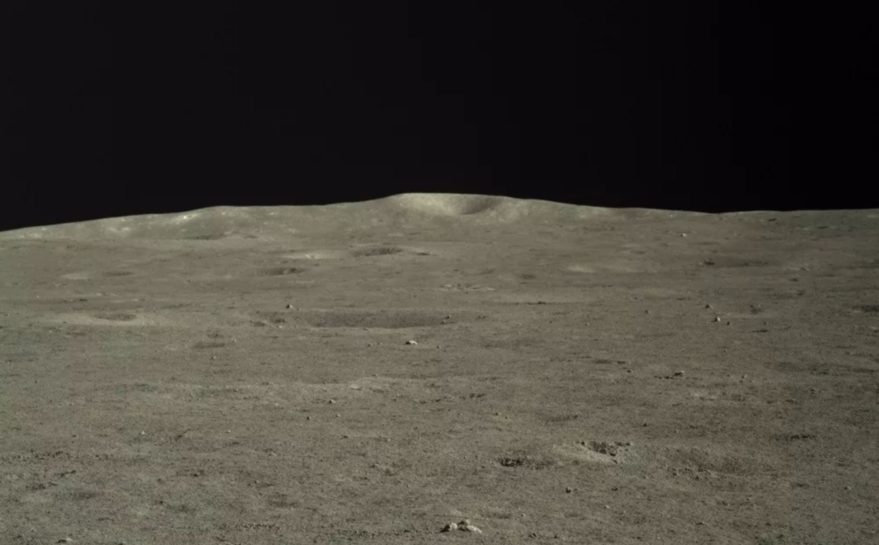
The ongoing Chang’e-4 lunar far side lander and rover mission will complete its 11th lunar day of activities Nov. 3. The mission’s Yutu-2 rover has so far traveled 289 meters across Von Kármán crater. It has detected evidence of material originating within the lunar mantle during its exploration.


An image taken by the Chang'e-4 mission rover Yutu-2 showing the central peak of Von Kármán crater on the far side of the moon, around 46 kilometers distant from the rover.
An image taken by Chang’e-4’s Yutu-2 showing the central peak of Von Kármán crater, around 46 kilometers distant from the rover. Credit: CNSA/CLEP
More


#Space | https://sciencespies.com/space/china-targets-late-2020-for-lunar-sample-return-mission/

Miniature Black Hole Surprises Astronomers: It Shouldn’t Exist.

More

Generally speaking, black holes are the corpse of a dead star. But not all stars become black holes at the end of their life – for instance, our familiar Sun is small enough to avoid that fate. Until recently, black holes were thought to be formed only by super-massive stars, and the smallest black hole known to scientists was about five times the mass of the Sun. However, a recent scientific paper has announced the discovery of a black hole much smaller than that. This would require astronomers to rethink their models of black hole formation, because black holes shouldn’t be so small.


So, what sets the mass of a black hole? It’s the size of the star from which it was formed. Black holes come from big stars and, like some of their Hollywood kin, big stars live fast and die young. A high mass burns through their fuel very quickly, first converting hydrogen to helium, and then, when the hydrogen runs out, heating up and burning helium. During the helium-burning phase, the core of the star puffs up and it becomes red giant, with a radius large enough to encompass the orbit of the Earth.


More

Eventually, the helium runs out too, and even heavier elements are used to power the nuclear fusion of the star, with oxygen, then silicon, until finally the star is converting its material into iron. And when iron appears, the star runs out of fuel and collapses in on itself, heating up as it collapses, causing a supernova. The outer layers of the star blast off into the cosmos, leaving a remnant.


If the mass of the parent star is over about twenty times the mass of the sun, it will leave a core of perhaps five solar masses. If the core is that large or larger, the gravity is so strong that matter cannot resist the force, and it crushes down and forms a black hole.


For stars with an initial mass of four to eight times the mass of the Sun, the process is similar, but the remaining core is much smaller – perhaps two times that of the Sun. Under these conditions, the gravity governing the core is smaller and isn’t strong enough to make a black hole. What remains is what is called a neutron star, which is when the matter of the core is packed together so tightly that protons and electrons combine to make neutrons, and the neutrons have no space between them and neighboring neutrons.


For smaller stars like our sun, the process is much less dramatic, and the outcome is a white dwarf, which is essentially a small and burned out star, an ember that will glow for eons.


It’s the gap between the heaviest neutron stars and the smallest black holes that is interesting to astronomers. Prior to this discovery, the mass of the heaviest known neutron stars was about twice that the mass of the Sun. And the smallest measured black hole has a mass of about five or six times that of the Sun. The mass region of 2 - 5 times the mass of the Sun is called the mass gap.


More

Dr. Todd Thompson, professor of astronomy at Ohio State University and lead author for the recent study decided to look for burned out stars with masses in the range of the mass gap. He and other scientists combed through data taken using the Apache Point Observatory Galactic Evolution Experiment, or APOGEE, which studies the spectra of about 100,000 stars in the Milky Way. 


A physics principle called the Doppler Effect says that the color of a star (indeed any object) will change slightly depending on the star’s motion. If it is moving towards a telescope, it will appear slightly bluer, and if it is moving away from the telescope, it will appear slightly redder.


If two stars are near one another, they will orbit a central point. And, in their orbit, they will alternatively move toward and away from the Earth, which will cause slight color shifts. If one of the two stars is a black hole, what astronomers will see is a single star with rhythmically-shifting color. 


After sifting through their data, the team found a red giant star that was locked in orbit with an invisible companion. The red giant had a mass between 2.2 – 4.2 times the mass of the sun, and the invisible companion has a mass in the range of 2.6 – 6.1 times that of the sun, with a most likely mass of 3.3 solar masses.


The most probable mass for this invisible object is right in the middle of the mass gap, although uncertainties in the measurement almost span the range from the heaviest neutron star and the lightest black hole. 


Astronomers are naturally very interested in this mysterious heavy object. If more precise measurements result in a mass near 3.3 solar masses, astronomers will have to rethink their models of black hole formation. And, if subsequent measurements find that the unseen object’s mass is at the edges of the range reported in this measurement, it still will be an example of a very heavy neutron star or a very light black hole, however it is…by far…more likely to be a small black hole. No matter the outcome of follow on measurements, this discovery will be interesting to astronomers.


While scientists know a great deal about the universe and the life and death of stars, there are always surprises. That is, after all, why we do research. More studies like this one will teach us more about the life cycle of massive stars. 


#News | https://sciencespies.com/news/miniature-black-hole-surprises-astronomers-it-shouldnt-exist/

Crabs Can Learn to Navigate Mazes, Too


Rats are famously skilled at navigating mazes in the labs—a sign that they are capable of what scientists call “spatial learning,” or the ability to find your way around an environment. Spatial learning has, in fact, been well demonstrated in many vertebrates and a few invertebrates, like honey bees. But a new study in Biology Letters highlights the cognitive abilities of an understudied species: crabs, which, as it turns out, is pretty good at completing mazes, too.


You might not expect that crabs would be able to perform this relatively complex task; after all, “[c]rustaceans have a brain roughly 10 times less than the size of a bee’s in terms of neuronal count,” study co-author Edward Pope, a marine biologist at Swansea University in Wales, tells Layal Liverpool of New Scientist. But as the researchers note in the study, crustaceans live in dynamic underwater habitats, and “[l]earning the location of, and routes to, resources should, therefore, be an adaptive trait.”


Mazes were a perfect way to put the crawling critters’ spatial learning to the test. The researchers scooped up 12 European shore crabs (Carcinus maenas) from two aquatic locations in South Wales and brought them back to the lab, where the animals were kept individually in tanks. After an acclimation period, the team popped the crabs into an underwater maze, with a single crushed mussel—a tasty snack for crabs—at its end point. There was only one correct path through the maze, which required five changes in direction and included three dead ends.


The crabs were tested once a week for four weeks. All of the animals were initially able to complete the maze within 25 minutes, but during the first week, none made it to the end of the maze without taking wrong turns, reports Veronique Greenwood of the New York Times. As the experiment progressed, the crabs were able to complete the task more quickly, and with fewer mistakes. By week three, the study authors write, some of the crabs were able to navigate the maze without taking any wrong turns.


The smell of food was “undoubtedly” important in helping the crabs navigate the maze, the researchers note, so the team next sought to determine how crabs would fare without olfactory cues to guide them. The researchers waited two weeks after the first phase of the experiment had concluded, then placed the crabs back into the maze—this time without a snack waiting at the end. All of the crabs zipped to the end of the maze within eight minutes, presumably expecting food, which in turn suggests that they had “some memory of the maze,” the study authors write. For comparison’s sake, the researchers also tested 12 crabs that had never seen the maze before. Without food to attract them, they struggled to find their way out, and only seven actually completed the task.


“[W]e know that insects, especially ants and bees, have some impressive mental abilities but we haven’t really looked for them in their aquatic counterparts,” Pope says. “The fact that crabs show a similar ability to insects is, in some ways, not that surprising but it is great to be able to show it so clearly.”


Understanding crustaceans’ spatial learning abilities not only fosters our appreciation for these creatures, but also helps scientists gauge how they might respond to the changing ocean environment. For instance, as Greenwood notes, researchers can study how crabs’ maze skills are affected by water that mimics the warmer and more acidic oceans that are predicted to become a reality by 2100.


“Gaining a baseline understanding of the lives of the animals that are going to actually be impacted by the changes in our future oceans is really important,” says study co-author Mary Gagen, a geographer at Swansea University who specializes in climate change. “That doesn't just mean the big charismatic animals, it means things like crabs that are so important for the food chain.”


#News | https://sciencespies.com/news/crabs-can-learn-to-navigate-mazes-too/

Mobile app to provide the latest on black hole collisions and merging neutron stars


Mobile app to provide the latest on black hole collisions and merging neutron stars

Credit: University of Birmingham
More


PhD students from the Institute for Gravitational Wave Astronomy have released a new app to encourage members of the public to stay up to date with new gravitational wave events in near real time.

Chirp, designed for use on mobile phones, displays the latest alerts from Laser Interferometer Gravitational-Wave Observatory/Virgo about a possible new gravitational wave. For every new and previous alert you can look up preliminary information about the source of the event, for example whether the signal indicates a black hole collision, or merging .

These detections are made by an international team of scientists, including those from the University of Birmingham using the two LIGO detectors in the USA and the VIRGO in Italy. The LIGO detectors are the same detectors that won the Nobel prize for Physics in 2017. Along with VIRGO they made a direct observation of a neutron star collision through gravitational waves which started the era of multi-messenger astronomy.

With the start of the third observing run, these gravitational wave events are being released for the first time on public alerts allowing anyone to join us on our journey to discover more about the universe.

Then Postgraduate student, now research fellow Sam Cooper explained his idea for making the app.
MoreMore

"I'd long wanted a way to showcase to my young cousins what I was researching at university and why I couldn't play more Mario Kart with them during the week! I wanted to display the event information in a clear and understandable way, which is the driving focus of Chirp."

Gravitational waves are generated by some of the most catastrophic, violent events occurring in the Universe, such as the collision of black holes and neutron stars. The detected on 14 September 2015 originated from two black holes, each around 30 times the mass of our Sun and located more than a billion light years from Earth, merging to form a single, more massive black hole. The discovery confirms one of the major predications of Albert Einstein's 1915 theory of general relativity.

Aaron Jones another PhD student added, "I develop new technology for the Gravitational Wave detectors here in Birmingham. Observing run 3 was particularly exciting as we have improved the detection sensitivity. I was excited to develop this with Sam because at a glance I can now see a quick overview of the detection candidates and their probable origins."

Sam Morrell another PhD student at the University of Exeter added: "I have been intrigued for a long time about the potential promise that modern technologies have for tapping into the public enthusiasm for cutting edge science. So when Sam discussed with me his vision for Chirp - to make an easily accessible resource to enable everyone to follow gravitational wave alerts - I was excited to help out."


Join us on Facebook or Twitter for a regular update.


Explore further


Squeeze leads to stellar-mass black hole collision precision


More information:
iOS: apps.apple.com/app/chirp-gravi … ave-app/id1484328193

Android: play.google.com/store/apps/det … =org.laserlabs.chirp


Citation:
Mobile app to provide the latest on black hole collisions and merging neutron stars (2019, November 1)
retrieved 1 November 2019
from https://phys.org/news/2019-11-mobile-app-latest-black-hole.html

This document is subject to copyright. Apart from any fair dealing for the purpose of private study or research, no
part may be reproduced without the written permission. The content is provided for information purposes only.


#Space | https://sciencespies.com/space/mobile-app-to-provide-the-latest-on-black-hole-collisions-and-merging-neutron-stars/